Every golfer in Chicagoland has a hole they dread. Maybe it's a fairway the width of a cart path, a green guarded by water, or simply 470 yards of misery into the wind. Opinions about Chicagoland's toughest stretches are easy to find at any 19th hole. Actual data is harder to come by though, so we went and got it.
After ranking Chicagoland's toughest public par-3s, it was time to move on to the holes that can ruin a scorecard in slower, more elaborate fashion: par-4s. The job got much bigger this time around, with over 1,200 par-4 holes at public courses across the Chicago area qualifying for this analysis. The 10 below are the ones that beat up good golfers the most, and every single one plays more than a full stroke over par for players who regularly shoot in the 70s.
Two courses earned the honor of landing on both lists. Glenwoodie GC and Makray Memorial GC each placed a par-4 here after appearing in the par-3 rankings. Congratulations, I guess?
Methodology
The data behind this article comes from our partner TheGrint, the popular golf scoring and handicap-tracking app. They graciously provided access to hundreds of thousands of anonymized rounds played across the Chicago area. We filtered that data down to public courses only, and examined the par-4s with at least 100 recorded rounds so the sample would be meaningful. This analysis focused on highly skilled players (handicaps under 10). The result is a ranking built on what good golfers actually shot, not on slope ratings or anecdotal reports. The scores for each hole are a combination of all tee boxes played. However, the yardages listed are from the hardest tee box, which is where these holes show their teeth. Additional articles are planned to show which par-4s are most troublesome for mid and high handicappers.
We started with low-handicap golfers for a simple reason: these are the players who should be making pars most easily. So when their scoring average skews high, the hole's earned it. Every par-4 on this list plays well over par for golfers who frequently shoot in the 70s; that consistency is the real headline. And these are average scores, which of course means many scorecards look far worse than the number listed.
TheGrint Tour
TheGrint made this analysis possible, and they've launched the TheGrint Tour Chicago in 2026: a local amateur golf tour bringing competitive, handicap-friendly events to the Chicago area. If you've ever wanted to play fun and rewarding tournament golf without joining a country club, this is for you! See the current schedule and sign up for events.
Key findings: hardest par-4s
| Average hole length | 445 yards |
| Longest hole in the top 10 | Glenwoodie #16, at 475 yards |
| Shortest hole in the top 10 | Klein Creek #2, at 411 yards |
| Most-played hole in the top 10 | Klein Creek #2 |
| Least-played hole in the top 10 | Broken Arrow (East) #2 |
| Scoring range | Every hole averages between +1.11 and +1.51 over par |
| Scope | Public courses only; low-handicap players (under 10); holes with 100 or more recorded rounds |
The 10 hardest par-4s, mapped
The top 10 hardest par-4s in Chicagoland
Now to the holes. We're counting down from 10 to 1, saving the toughest for last.
10. Cog Hill Course #2 (Ravines), Hole 10
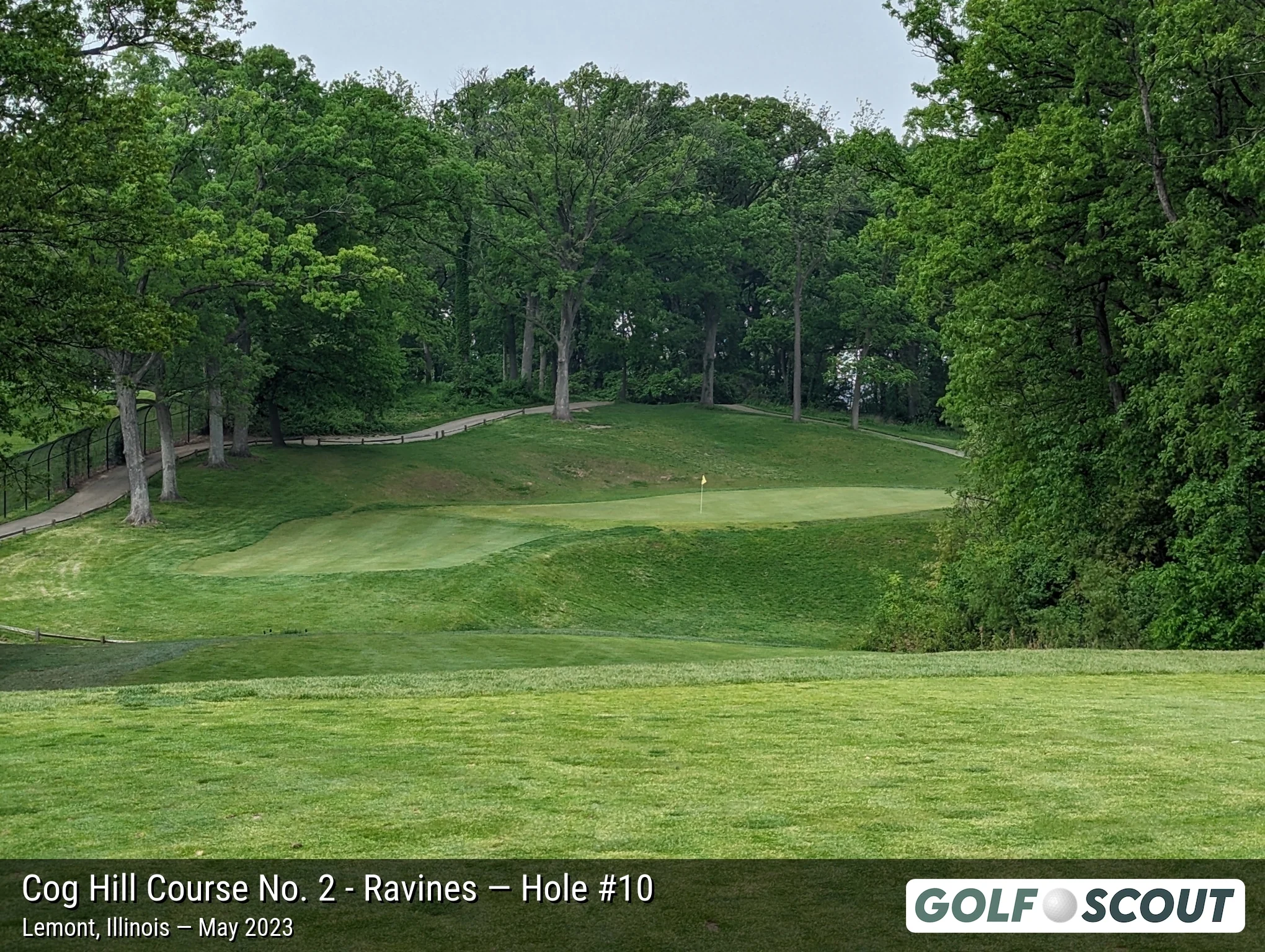
Truth in advertising: real ravines.
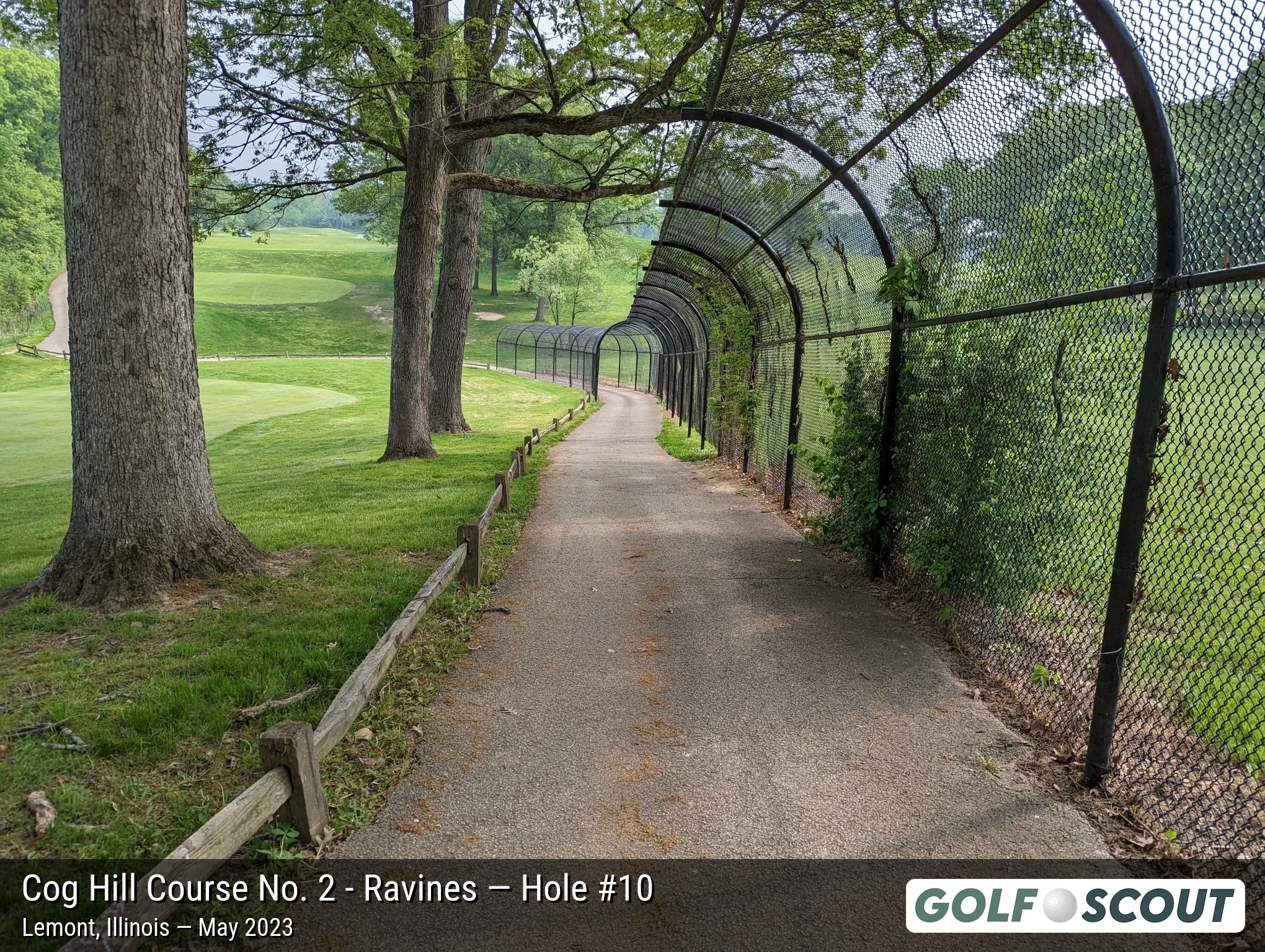
This fence prevents you from rage-quitting the hole.
A unique hole on Cog #2, demanding accurate munitions delivery to the left side of the downhill fairway. From there, an intimidating shot awaits, further descending over a ravine into a narrow diagonal green. Toward the end of the hole, the cart path disappears under a protective cage, a fitting symbol for the prison cell you've entered if your approach comes up short. The cage shields you from wayward shots as you disgustedly record the double bogey on your card.
9. Bartlett Hills Golf Club, Hole 12
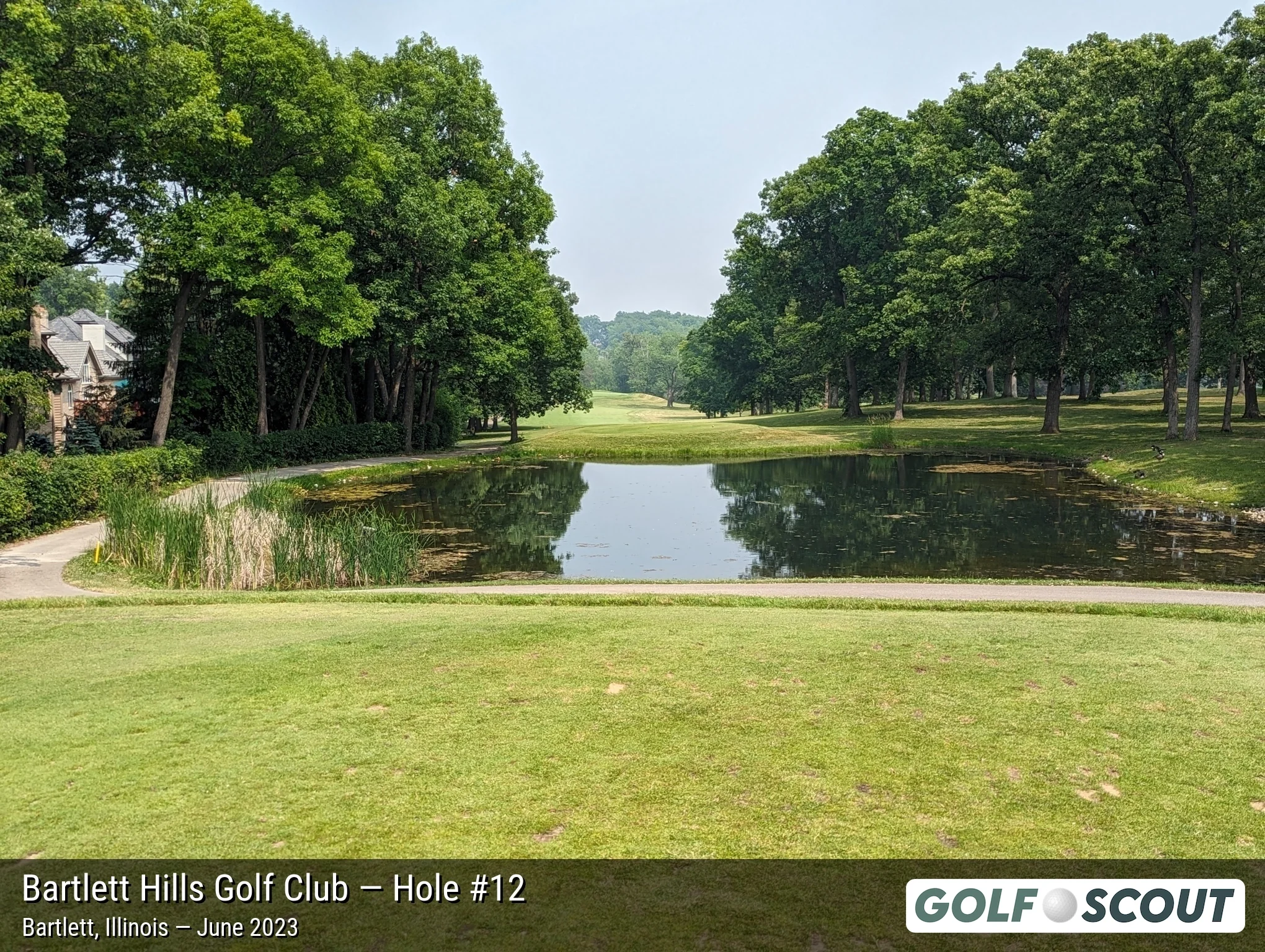
Only 416 yards, and bunkerless too. Second-shortest hole in the top 10. No big deal, surely. There's a small pond just in front of the tee box, but it's out of play unless you're having a really rough day. This hole plays like a funnel from the narrow end... but never gets wide enough. Overgrown trees infringe on your sight lines from the tee, and at its widest the fairway measures only about 25 yards across. There's OB left and tree trouble right, so there's nowhere to bail out. You just have to take dead aim and hit a precise ball.
8. Seven Bridges Golf Club, Hole 16
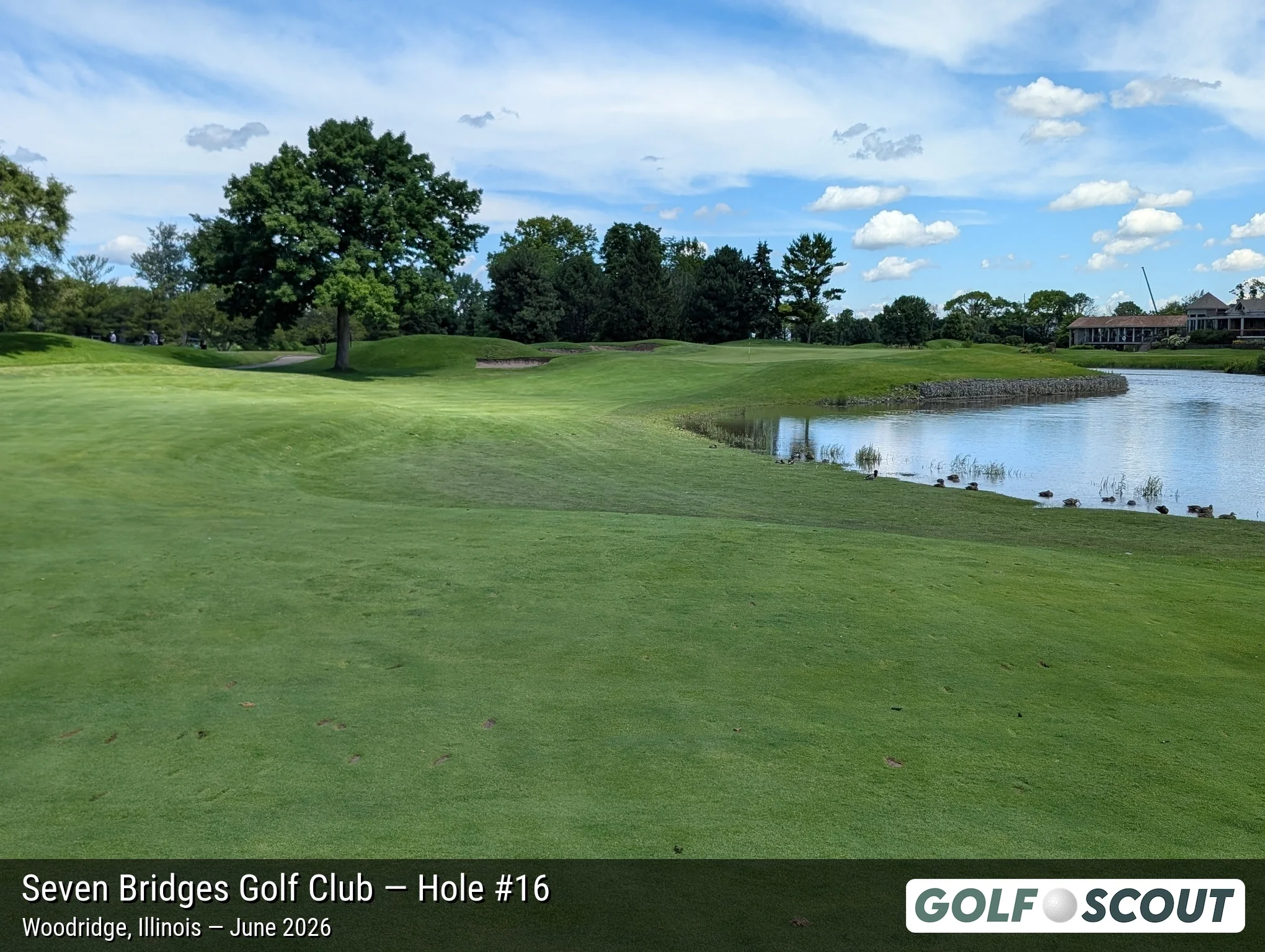
Don't miss right.
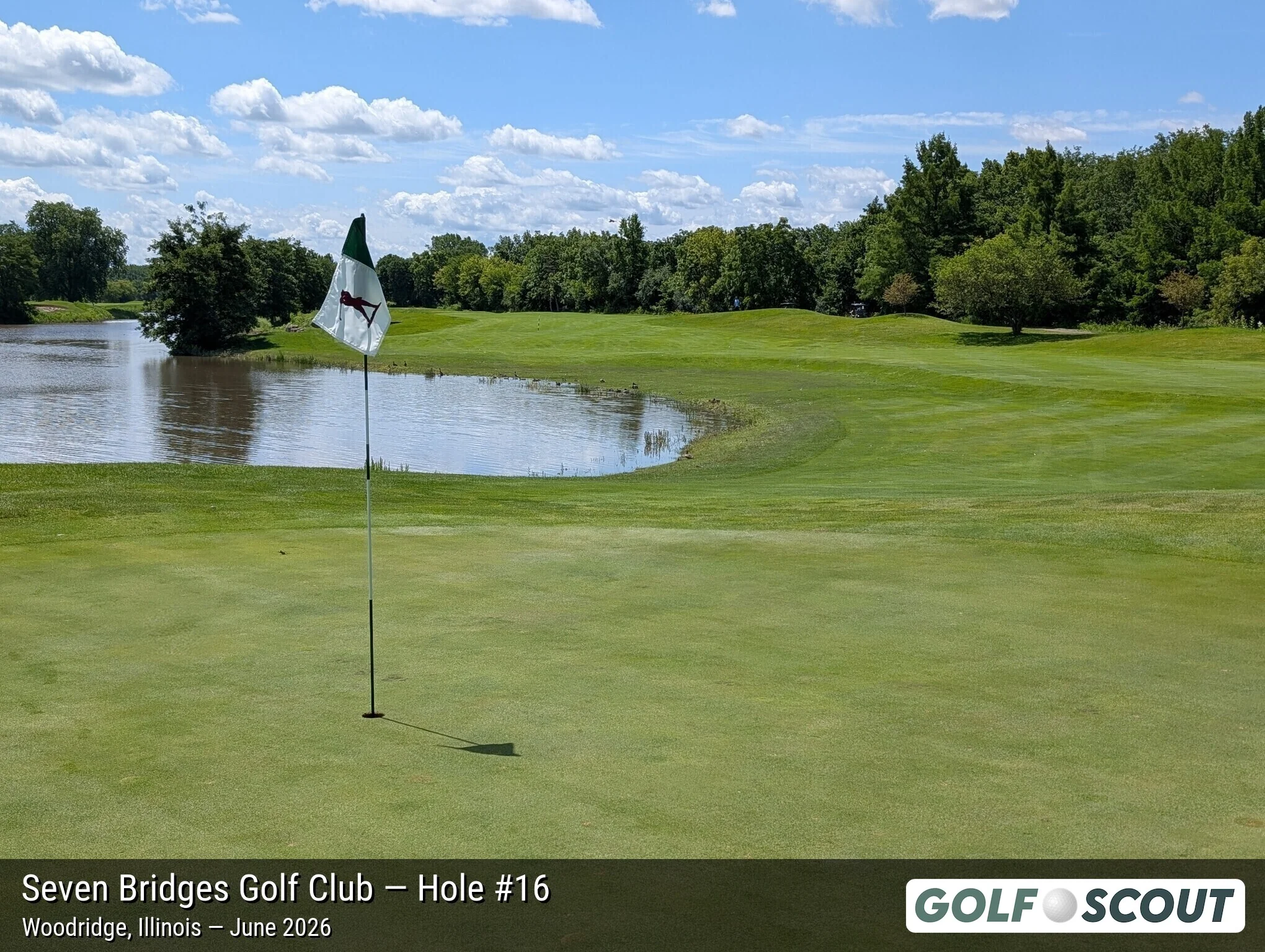
Reverse view of hole 16 from the green.
The hole is named Maelstrom. It already psychologically torments you before you even hit a shot. At 441 yards, it's tied for fifth-longest on this list. A big pond runs down the entire right side of the hole, while the left is guarded by a tree line and the East Branch of the DuPage River. In other words, you absolutely must launch your ordnance straight, because trouble is waiting on both flanks. There are no fairway bunkers to worry about, which is a small mercy, but two greenside bunkers stand between you and a clean finish.
7. Old Orchard Country Club, Hole 13
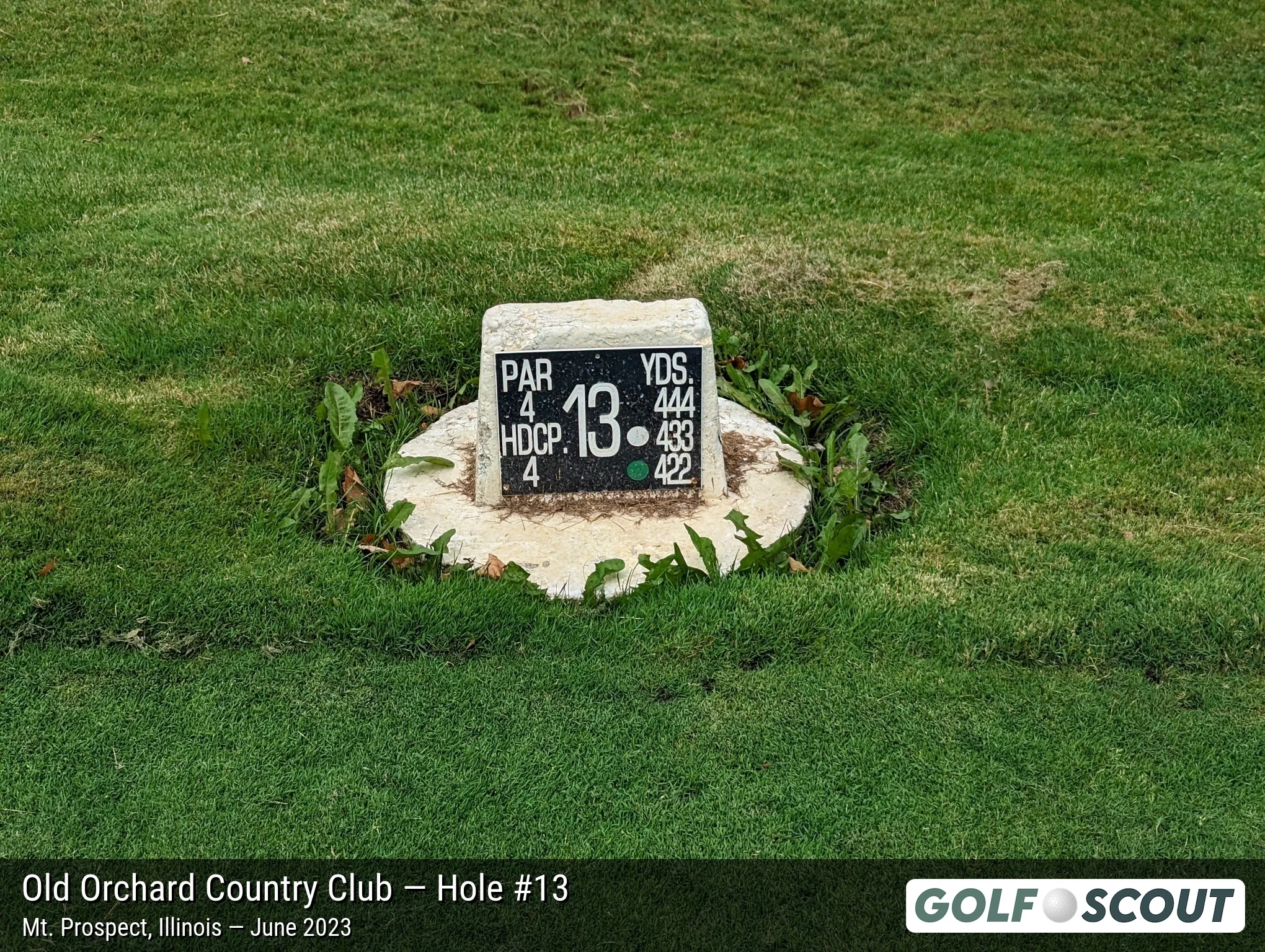
Shorter tee boxes don't provide much reprieve.
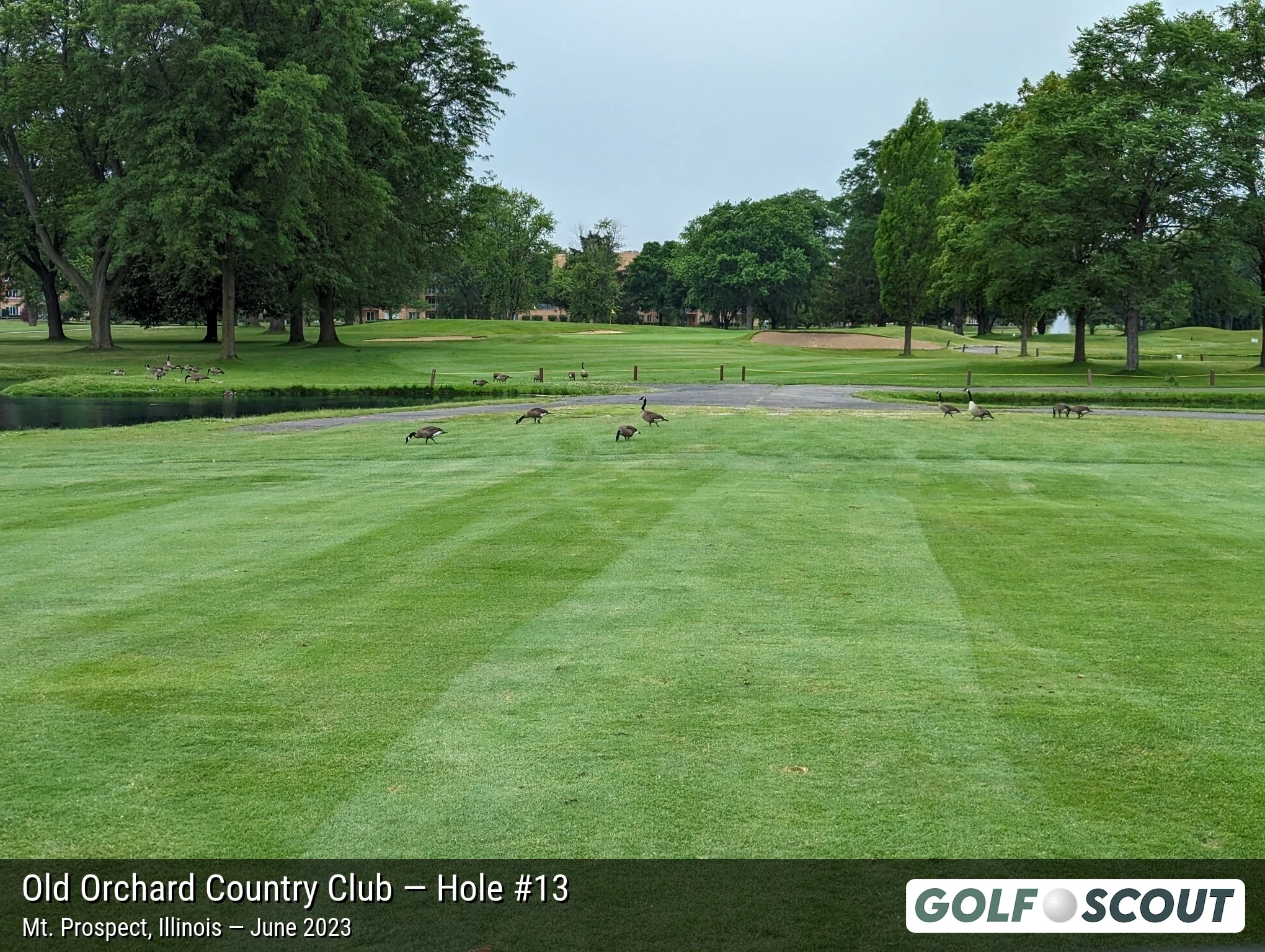
The geese will absolutely judge your approach shot.
At a course known for tight fairways and small greens, hole 13 is no exception. There's barely any difference between the tee box options here; just 22 yards separate three of them, so buckle up for this 444-yarder. Fairway bunkers reinforce both the left and right sides of the short grass near your typical landing area, with tree lines waiting just beyond them. Succeed with your first shot, and the second is no picnic, with water in play and three big bunkers surrounding the diminutive green. One of those traps is larger than the green itself, a true feat of bunkermaxxing.
6. Broken Arrow Golf Club (East Course), Hole 2
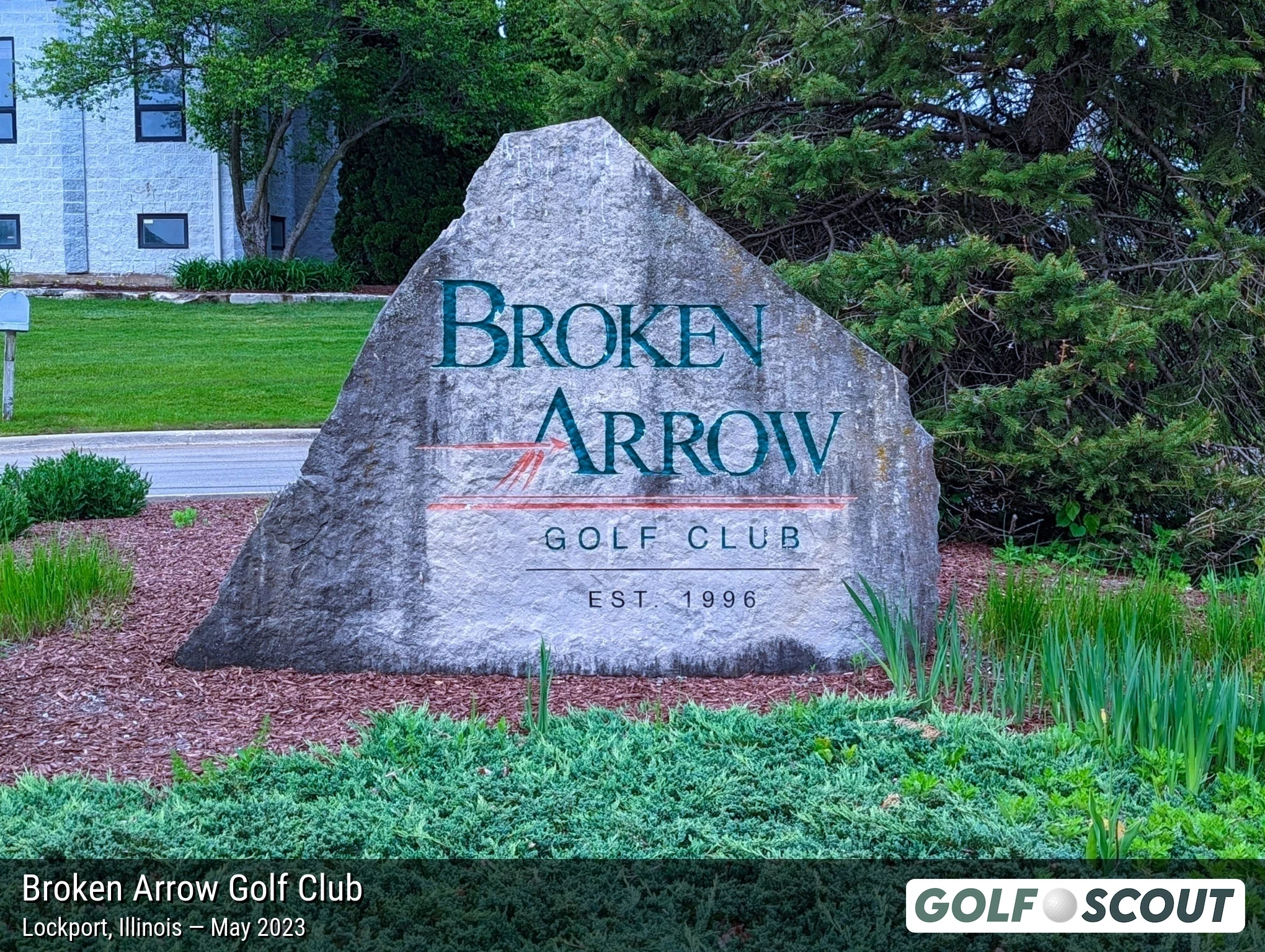
The first shot is relatively straightforward: drive it into a 30-yard-wide fairway and you're in business. The problem is that the fairway narrows considerably around the 250-to-280-yard mark, where fairway bunkers left and right take over the landing zone. It would be nice to turn on bumpers like in a bowling alley. The left side is ideal, opening up a clean look at the green, while anything right leaves you scrambling. A channel of water buttresses the right side of the green and the last 60 yards of fairway, in a neighborhood known as bogeyville.
5. Makray Memorial Golf Club, Hole 11
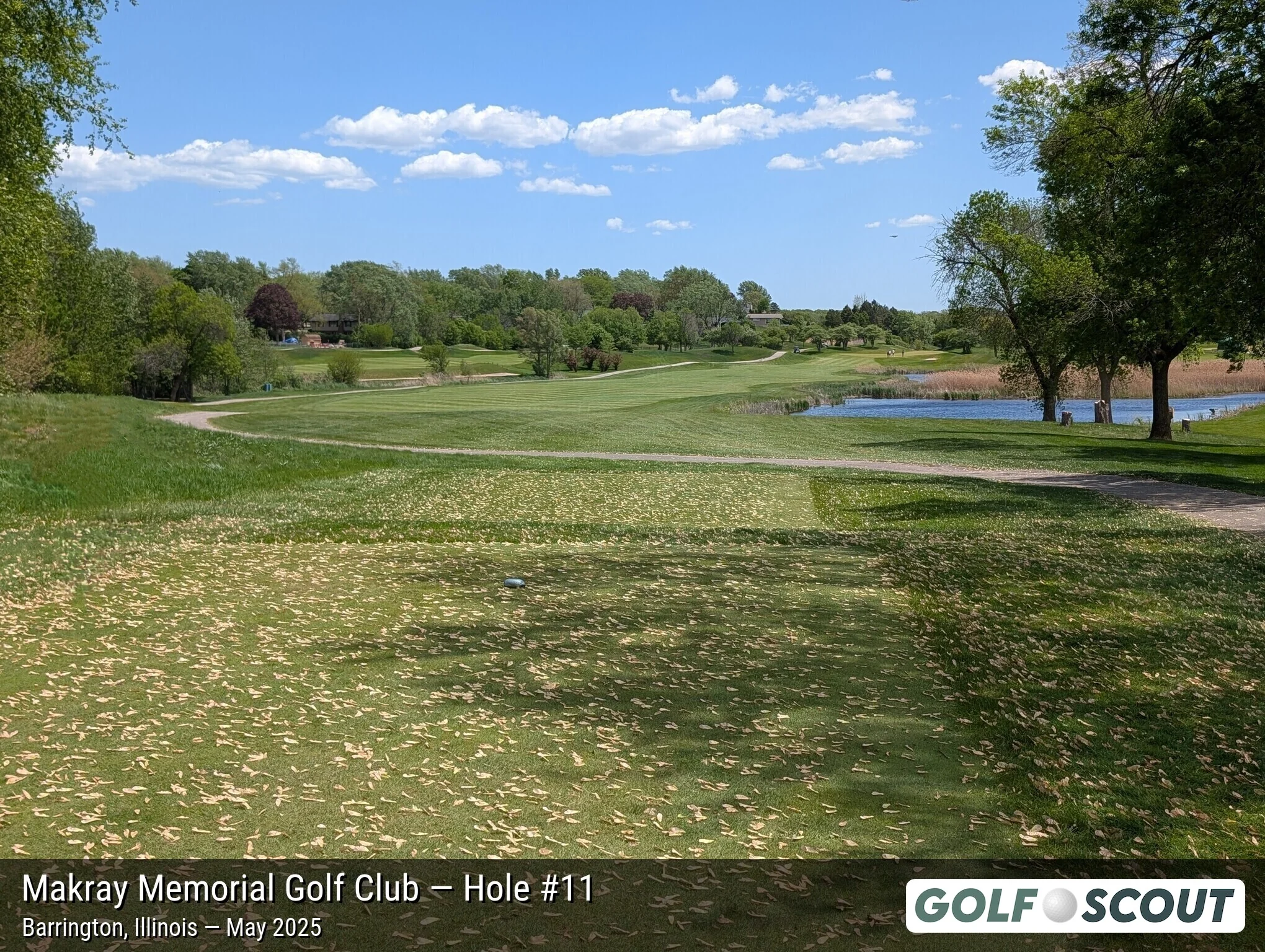
A giant body of water guards the entire right side. The fairway offers some mercy for once, running about 40 yards wide in the landing zone, so you have some room to breathe off the tee. Then the length catches up with you: at 471 yards, this is the third-longest hole on the list and ranks among the top 25 longest par-4s in all of Chicagoland. The green's undulations make it tough to close out your par, which is why it averages a 5.18 for the area's best golfers. You can play it well tee to green and still walk off with a bogey or worse.
4. Settler's Hill Golf Course, Hole 6
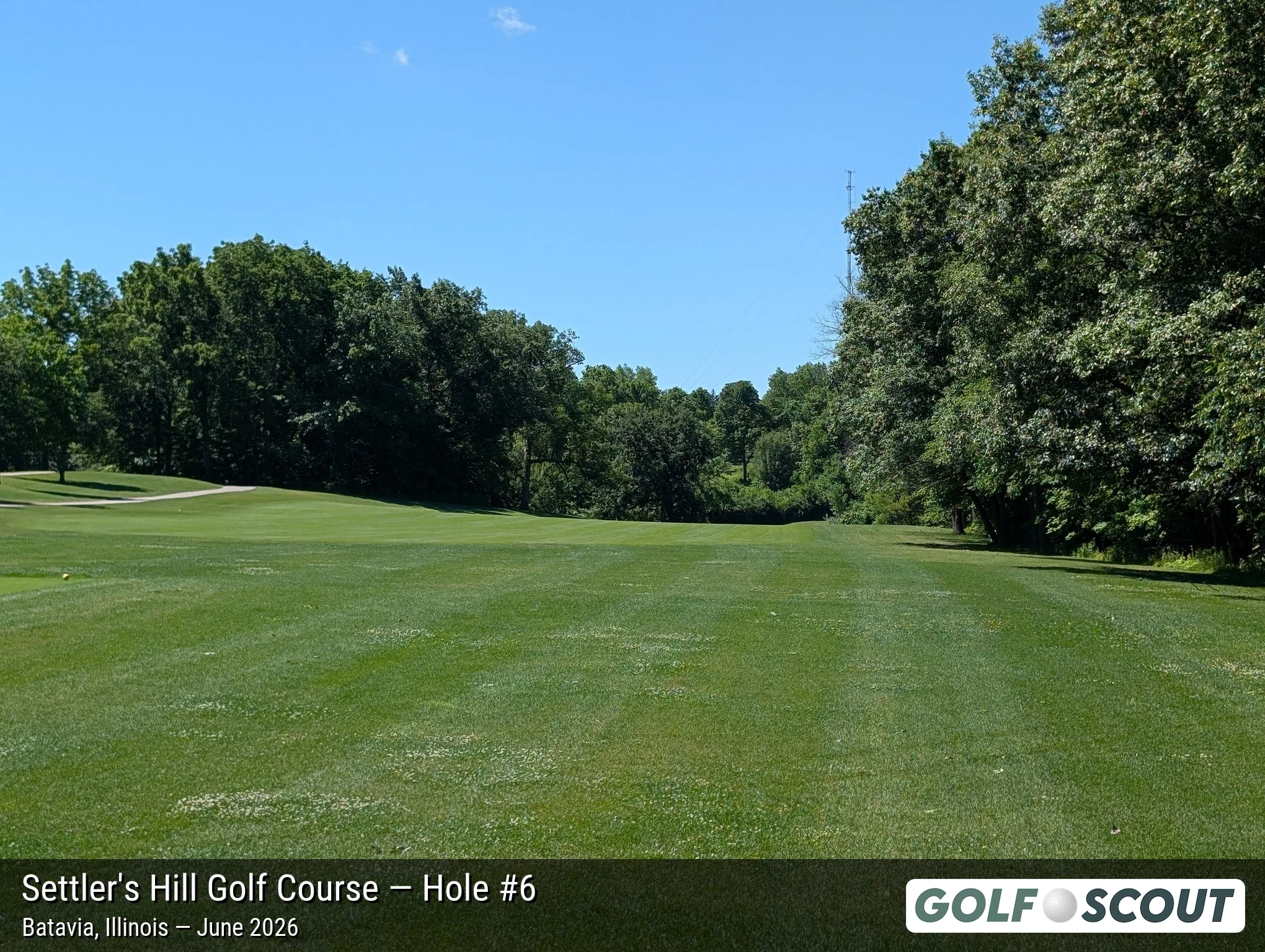
Down the hill and into the funnel you go.
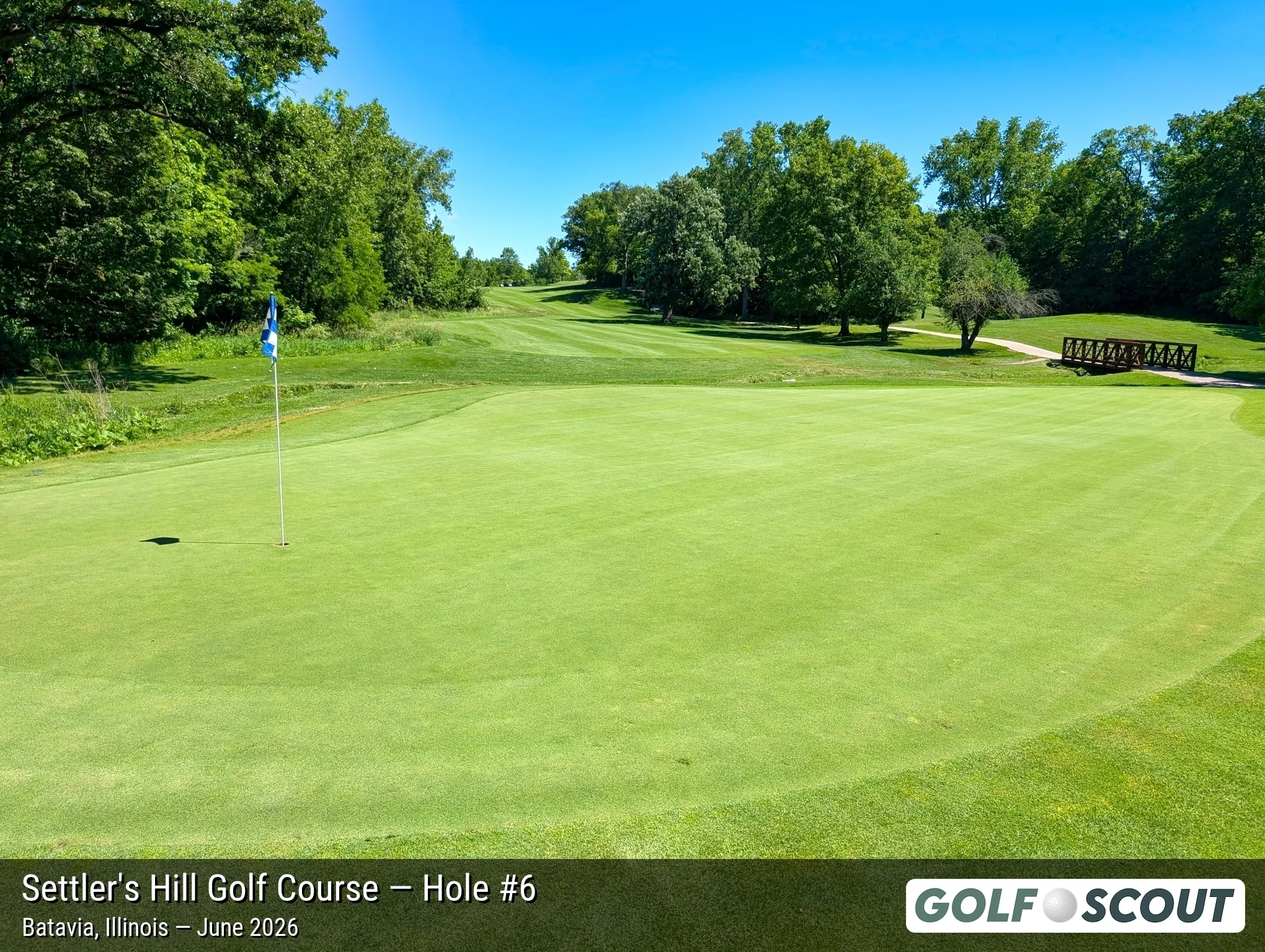
The pin was tucked way back this day.
Settler's re-routed the course for 2026, and what is now hole 6 was previously hole 5. It's a slight dogleg right, tree-lined on both sides, and very narrow. A downhill elevation change gets you started, then things tighten up considerably toward the end, where a bottleneck (with marginal turf) cranks the tension. The closing stretch runs slightly uphill, with a creek protecting the front of the green. The green itself is sloped uphill and runs diagonally from front left to back right. To score well here, your shots need to be struck precisely, or else you're blocked by trees on approach. Just a devilish hole all around.
3. Klein Creek Golf Club, Hole 2
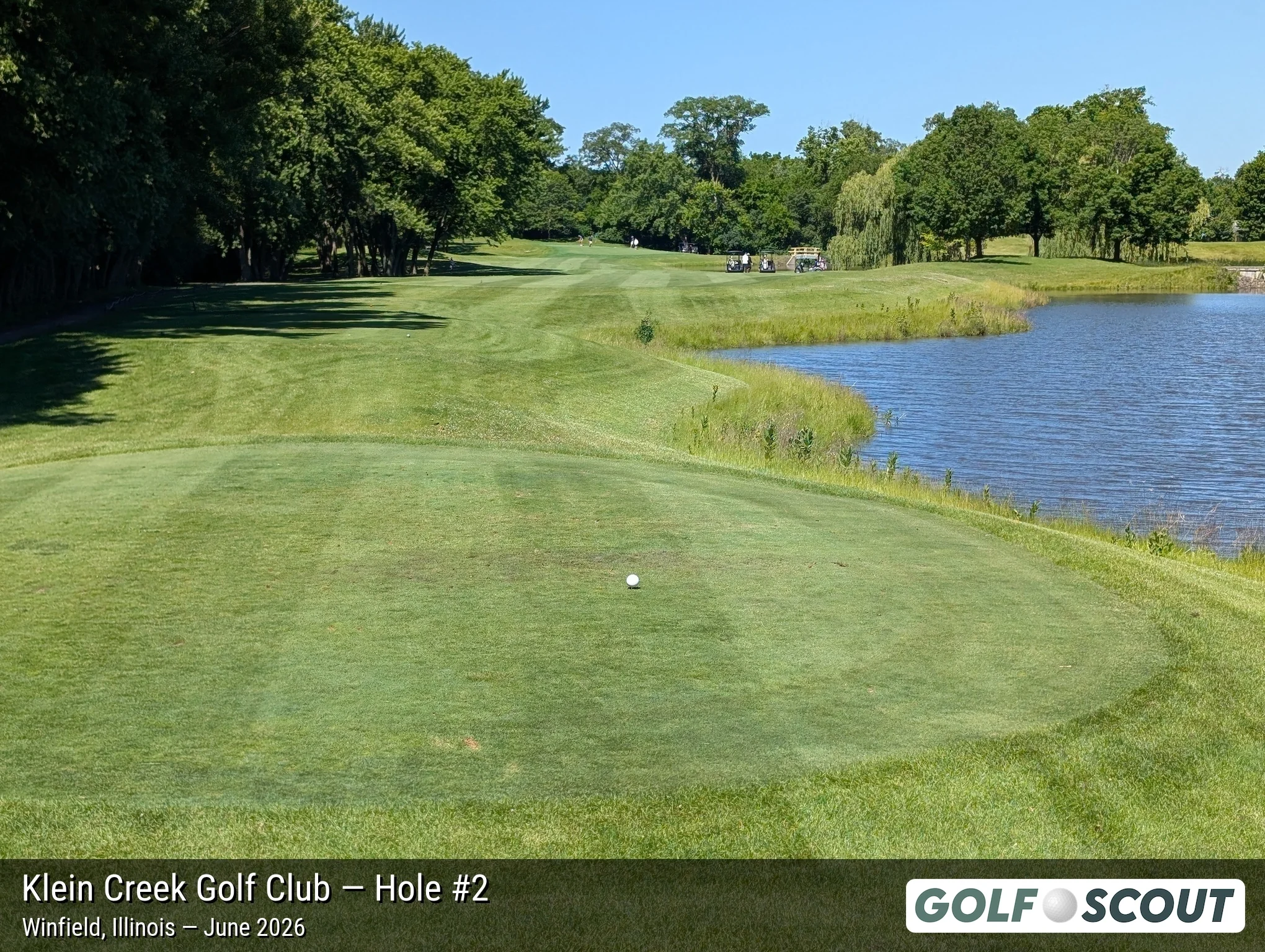
Short hole. Big anxiety.
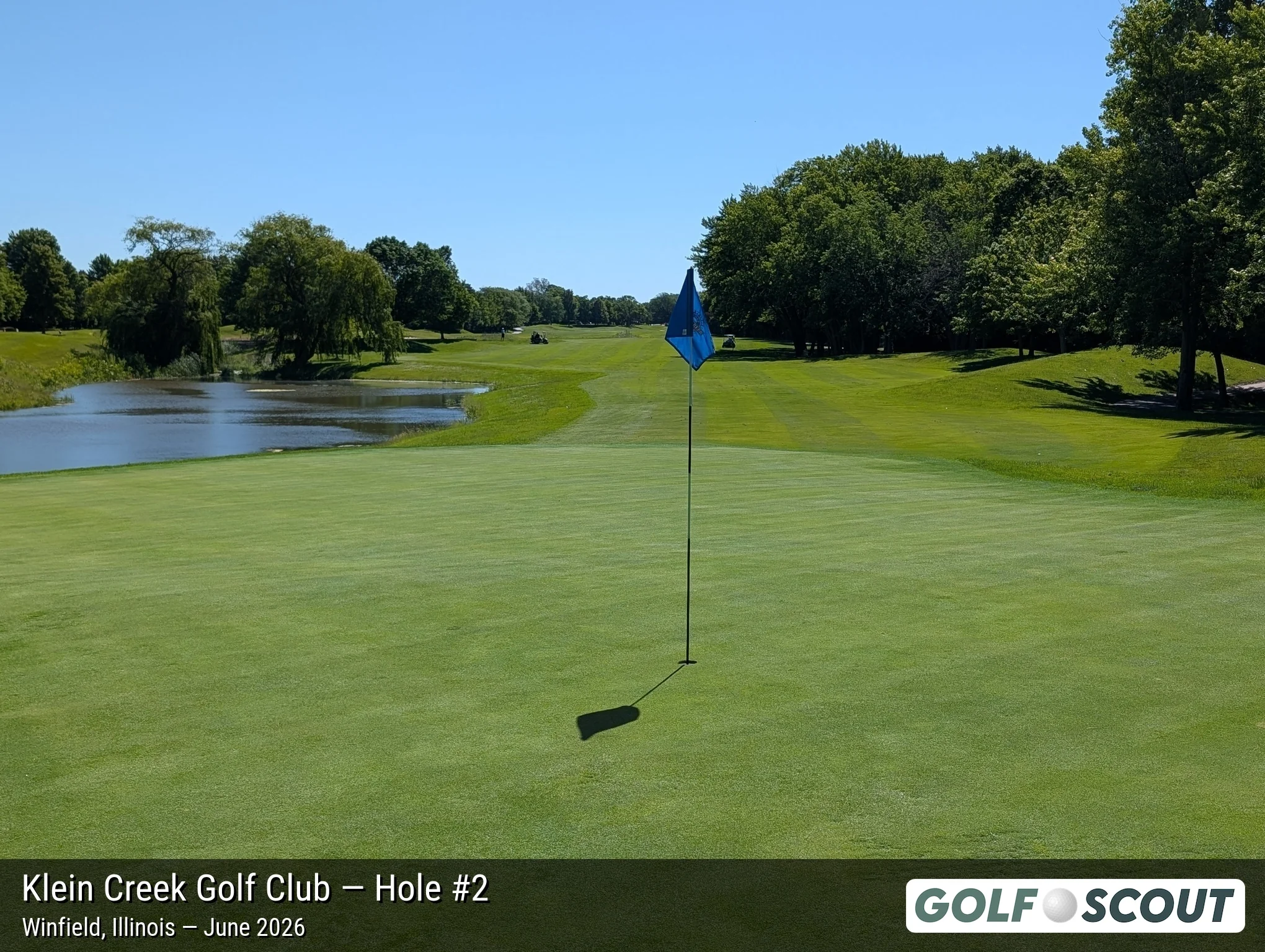
Hopefully you're playing your original ball when you get here.
It's only 411 yards, the shortest in this top 10. How hard can it be? Plenty hard, because this hole is wet and slender rather than long. Water lurks on the right and a treeline OB crowds the left, so you absolutely must hit it straight to have any chance at par. The green itself is fairly forgiving, though a trap guards the left side. It plays intimidating from the tee box, with overgrown trees encroaching into the already thin fairway real estate. There's no driving range to warm up here, so I hope you got dialed in on hole 1. I hit one into the drink my last time here.
2. Glenwoodie Golf Club, Hole 16
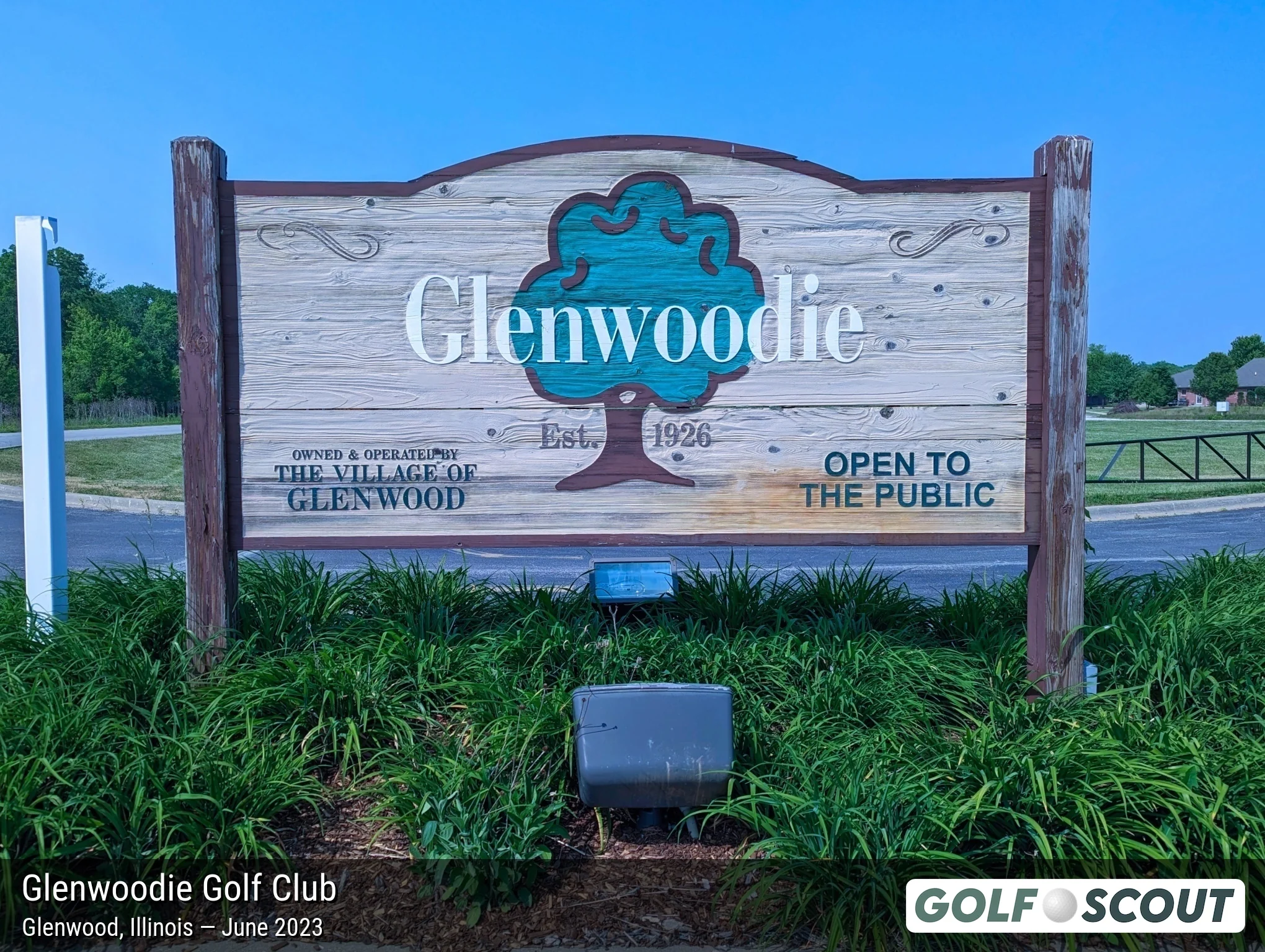
At 475 yards, this is the longest hole in the top 10, and it averages 1.3 shots over par. As a righty, if you have any slice inclinations, you're staring down a lost ball in the dense woods. The main issue right away is the needle-like fairway, which provides no room for error. After that, there's Deer Creek to contend with, plus one of the smallest greens on the course (and in the south suburbs). A fairway bunker on the left before the creek and a greenside bunker on the right add to the misery. This is a genuine scorecard wrecker toward the end of your round at Glenwoodie -- a course that also has the #5 hardest par-3 in Chicagoland.
1. Lost Marsh Golf Course, Hole 3
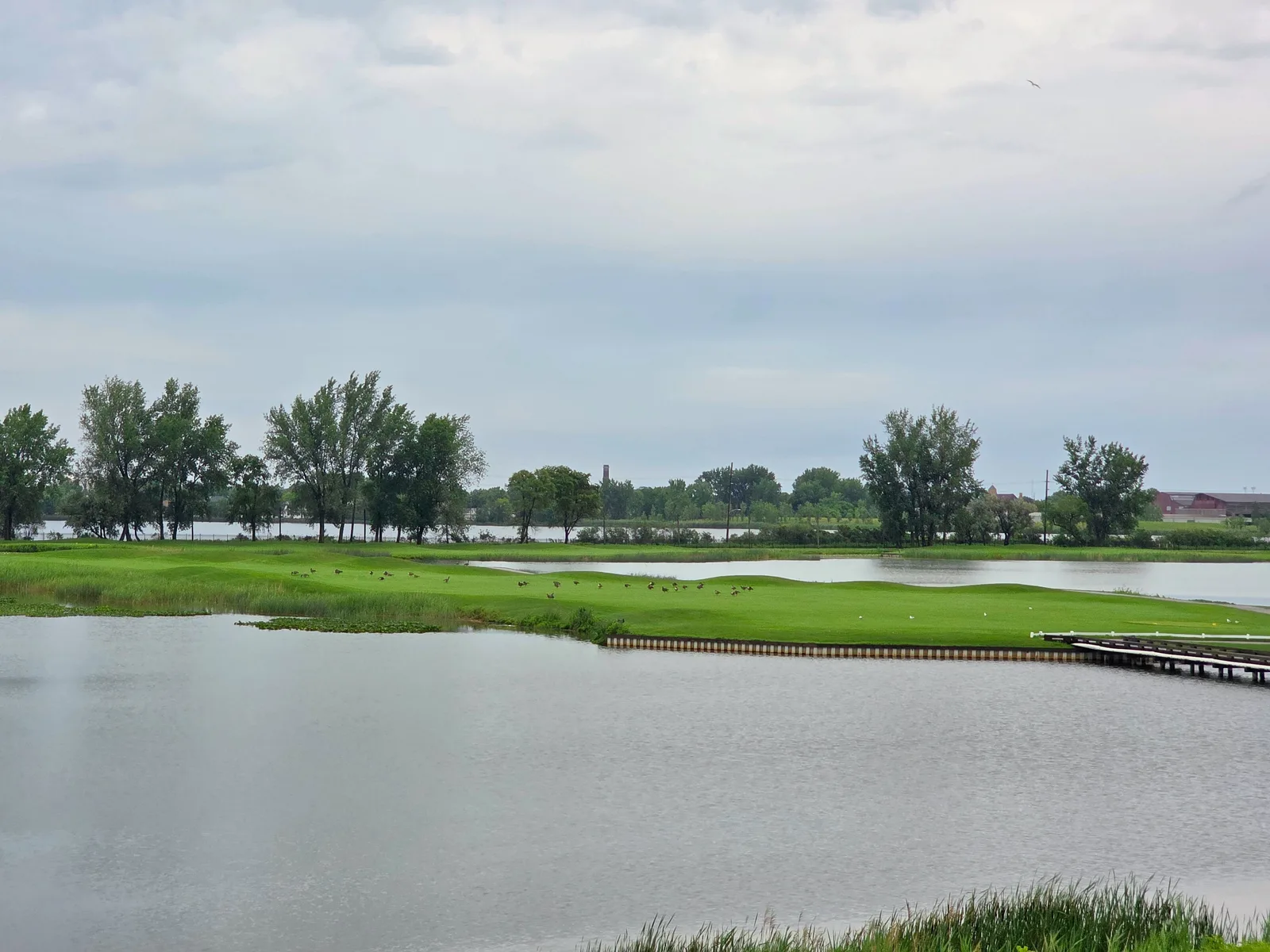
How scary is this tee shot?
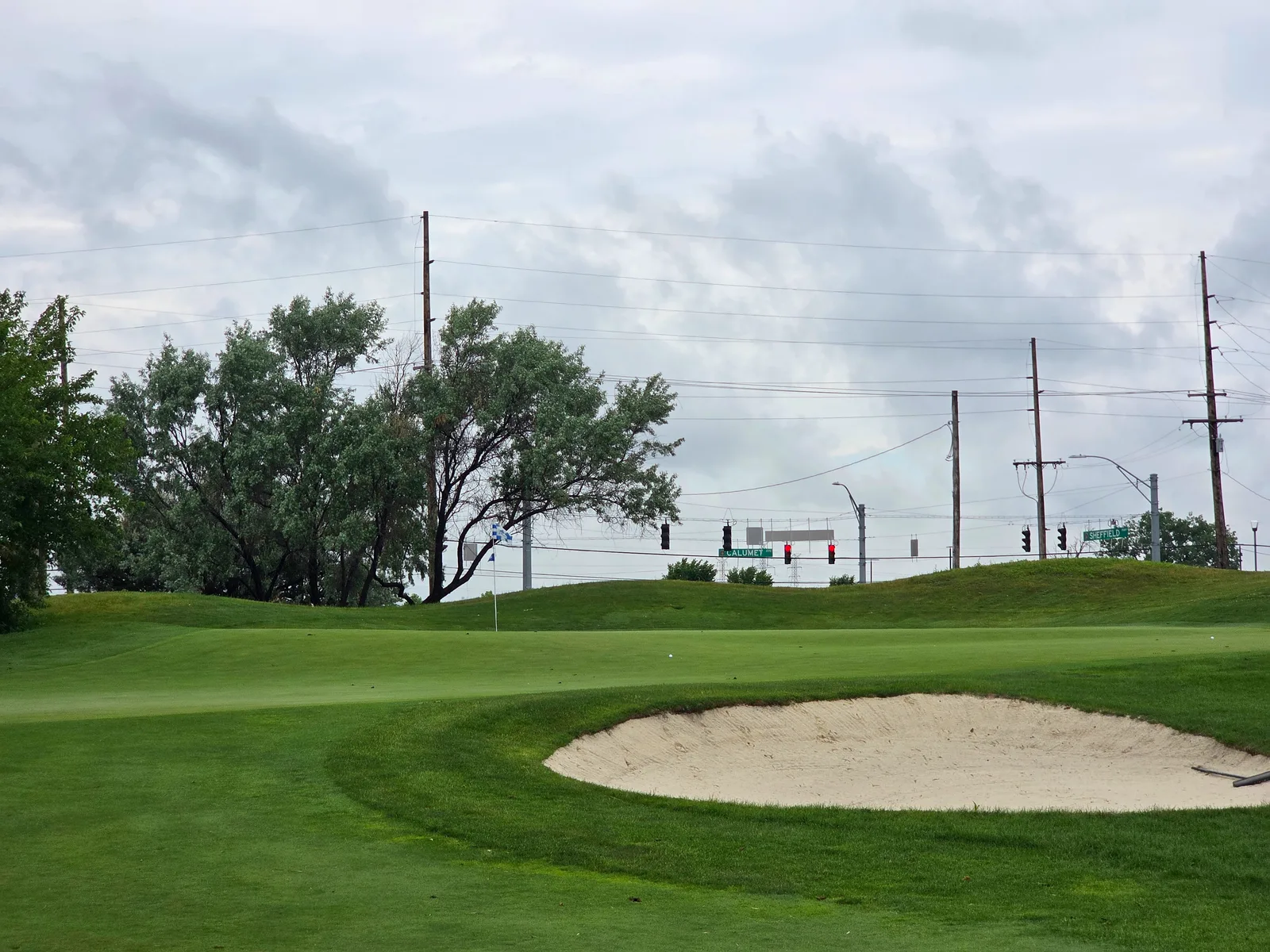
Extremely tricky sloped green adds to the misery.
A brutal hole worthy of the number 1 distinction, the toughest of over 1,200 par-4s that qualified for this article. This thing averages a full 1.5 shots over par for single-digit handicap golfers, easily besting the second-hardest par-4 on this list. Hole 3 is part of a diabolical sequence of watery opening holes, an infamous stretch noted extensively by locals and golf journalists alike. From the back tees, the hole stretches to 474 yards, which is enormous considering the terrain. Your first shot flies into an island fairway where there's simply nowhere to miss, and the typically windy conditions in Hammond make the tee shot even tougher. Survive that, and your water adventures still aren't over: you're faced with a forced carry into a tricky green with a giant ridge that'll give you headaches. People have complained about this hole (and the par-5 that follows it) for years. At 6,766 yards, this course won't overwhelm you with length, but it will test you like crazy. Par is an amazing score here. Bring extra golf balls.
Final thoughts
If this data teaches one lesson, it's that length alone doesn't make a killer par-4. The average hole here measures a beefy 445 yards from the back tees, sure, but the third-hardest par-4 in all of Chicagoland is just 411. What these ten really have in common is a lack of options: needle fairways, water on one or both flanks, OB lurking, trees pinching your sight lines. Good golfers can generally handle length. Holes that leave nowhere to miss are what finally wear them down.
Then there's Lost Marsh's hole 3, which lapped the field. The gap between first (5.51) and second (5.34) is larger than the gap between second and eighth. When the area's best golfers average a stroke and a half over par, the hole has essentially become a toll booth.
Just as interesting is who didn't make the list. Cog Hill's famed Dubsdread sat this one out entirely (little sibling Course #2 represented the family instead). Stonewall Orchard and George W. Dunne, two names that appear in virtually every "hardest courses in Chicago" conversation, are also missing. That's the nature of hole-level data: a course can grind you down relentlessly from 1 through 18 without any single par-4 producing an outlier.
A big thank-you to TheGrint for making this kind of analysis possible. If you want to track your own rounds, follow your handicap, or play competitive amateur golf close to home, TheGrint app and the new TheGrint Tour Chicago are the best ways to accomplish this.