Chicagoland is blessed with an abundance of great golf courses of all kinds. But if you don’t own a car, or your car is in the shop, golf can be a difficult game to play as a city-dweller. Lugging your clubs from home to the course requires a special kind of stubbornness, but golf is worth it during those precious warm weather months.
Transit apps like Google Maps are great for getting you from your apartment to a general vicinity. What they leave out is the reality of the final stretch. A 20-minute walk doesn’t look like much on a screen. Put a bag on your back, add August humidity, and throw in a busy street with no sidewalk, and that walk turns into a miserable forced march.
This guide evaluates the actual friction of getting from the train platform to the first tee. Chicagoland’s transit-accessible local tracks are split into four distinct categories based on exactly how much sweat equity you need to put in before you even check in. Direct train access to a course is smoother than having to transfer to a bus afterward. Depending on where you live, your mileage may vary, of course, but the last category is a surprising no-fly zone for public transit golfers.
Quick Reference
| Course | Tier | Line | Train Station | Walk |
|---|---|---|---|---|
| The Evans at Canal Shores | Door to door | CTA Purple Line | Central (Evanston) | ~1/10 mi |
| Ravisloe CC | Door to door | Metra Electric | Homewood | ~¼ mi (or free pickup) |
| South Shore | Train accessible | Metra Electric | South Shore | ~¼ mi |
| Jackson Park | Train accessible | CTA Red Line | 63rd/Stony Island | ~½ mi |
| Robert A. Black | Train accessible | Metra UP-N | Rogers Park | ~½ mi |
| Billy Caldwell | Train accessible | Metra MD-N | Edgebrook | ~½ mi |
| Edgebrook | Train accessible | Metra MD-N | Edgebrook | ~¾ mi |
| Sydney Marovitz | Train accessible | CTA Red Line | Addison | ~¾ mi |
| Joe Louis “The Champ” | Bus accessible | Bus only | N/A | ~¼ mi from bus |
| Marquette Park | Bus accessible | Bus only | N/A | ~¼ mi from bus |
| Columbus Park | Bus accessible | Bus only | N/A | ~⅓ mi from bus |
| Indian Boundary | Bus accessible | Bus only | N/A | ~½ mi from bus |
| Harborside International | Take a rideshare | Bus only | N/A | Not recommended |
Chicagoland Golf Course Transit Map
Door to Door
These two courses are as close to a frictionless transit experience as Chicago public golf gets. If you want low effort, these are your first picks.
The Evans at Canal Shores (Evanston, IL)
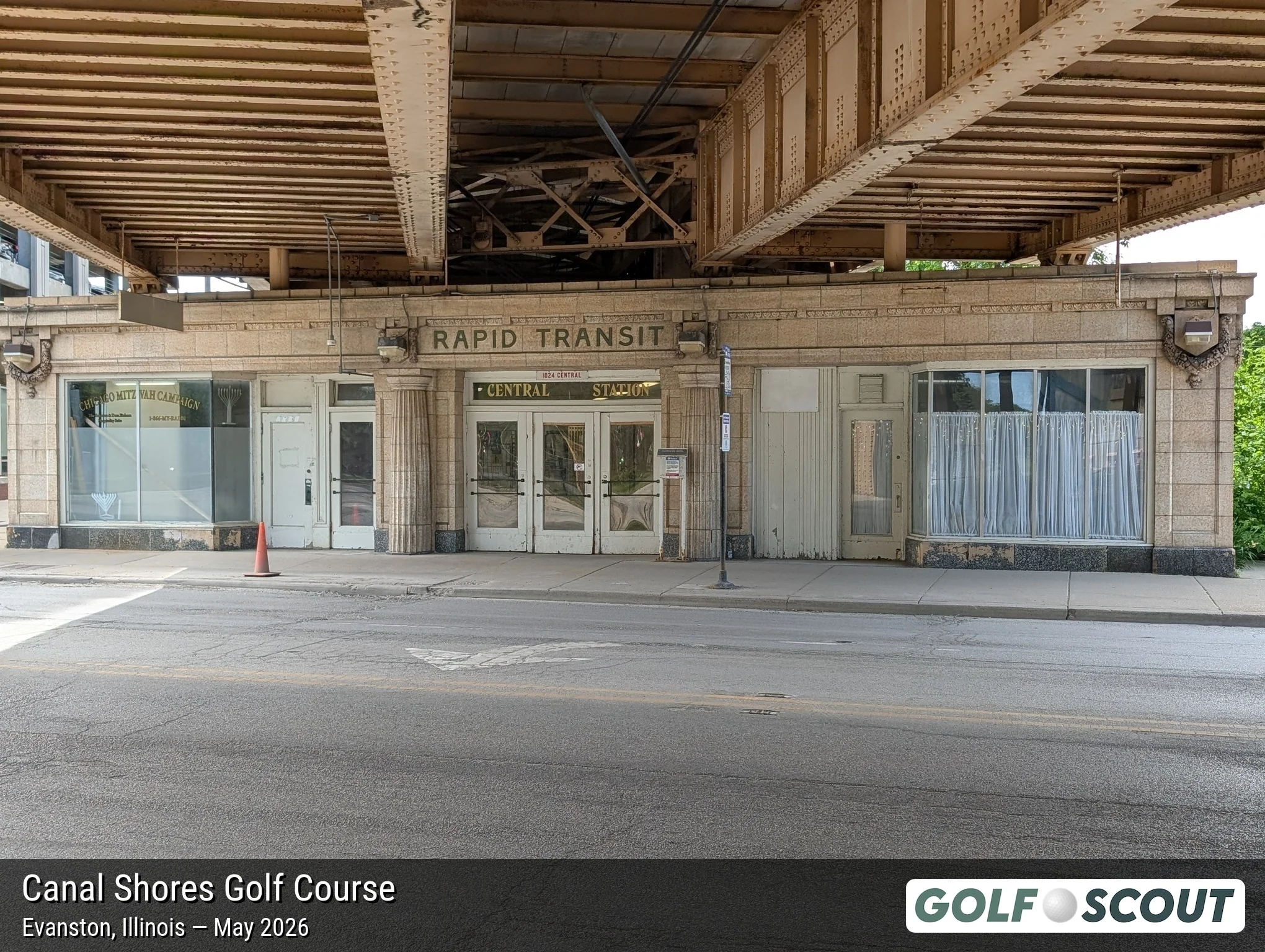
Entrance to the Purple Line Central station in Evanston.
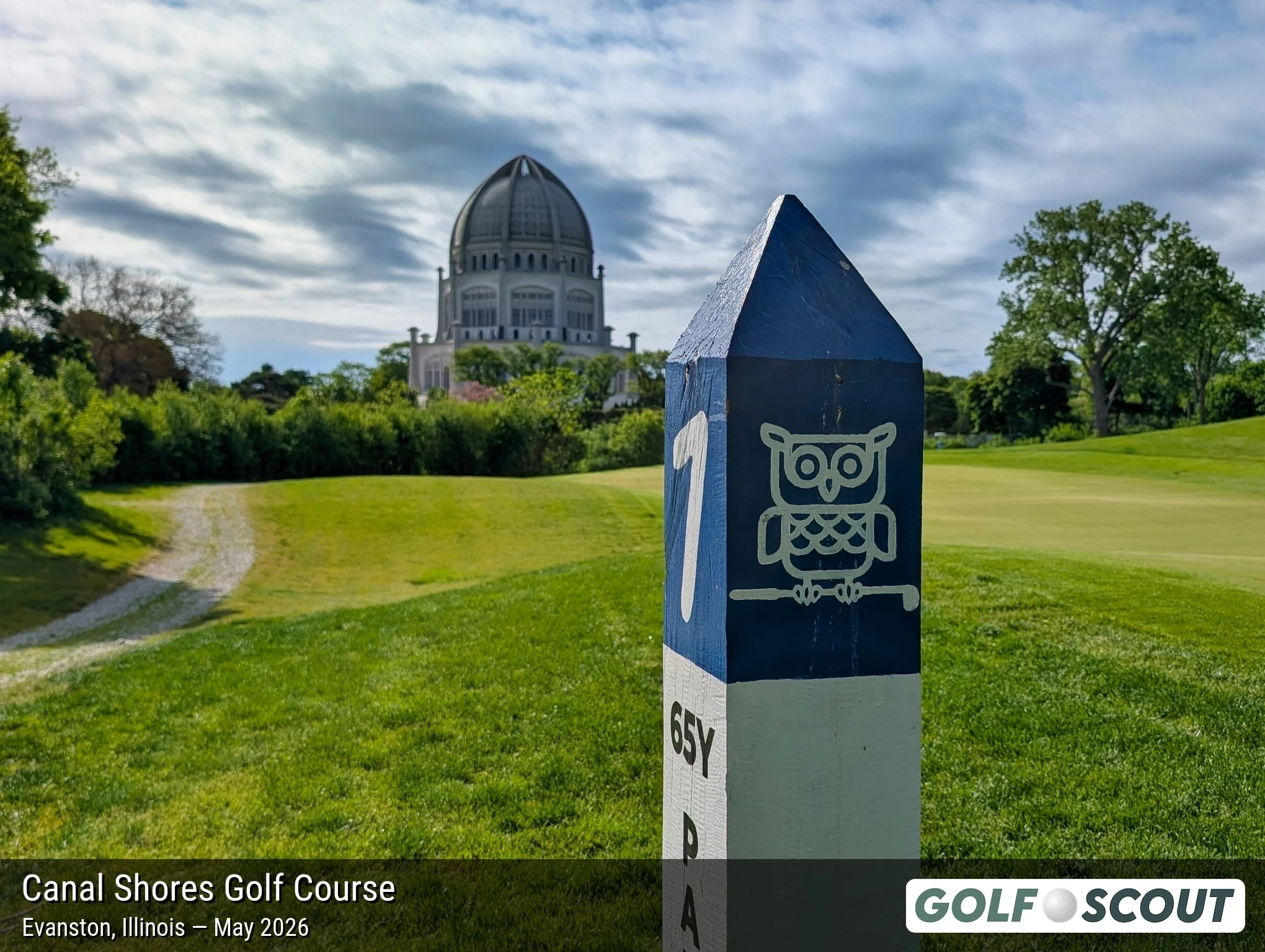
A view of the Baháʼí House of Worship from the 7th hole.
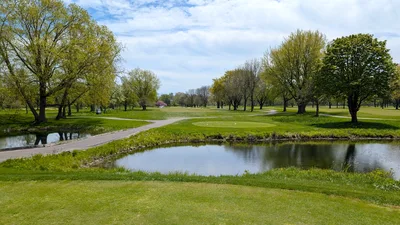
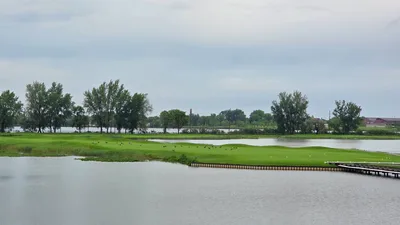
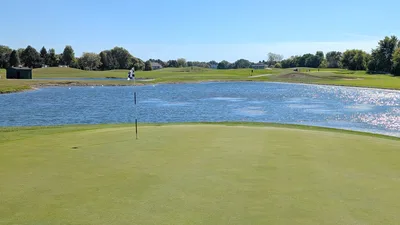
The course longtime Chicagoland golfers know as Canal Shores reopened in 2025 after a $5.8 million renovation. The CTA Purple Line's Central Street stop resides right across the parking lot from the entrance, a one-minute walk with a bag. The Western Golf Association specifically cited CTA proximity when choosing this as an Evans Scholars partner location. Originally designed by Tom Bendelow, the same architect behind Medinah's three courses, the layout crosses city streets and runs alongside both CTA and Metra rail lines, making for one of the more unusual rounds you'll play anywhere. The renovation added new greens and holes inspired by classic templates, while keeping the neighborhood park atmosphere intact. Dogs on the fairways, joggers cutting across greens, someone doing Tai Chi near the third hole: this is Canal Shores, and that's the whole point. You'll see the beautiful Baháʼí Temple during the round.
Ravisloe Country Club (Homewood, IL)
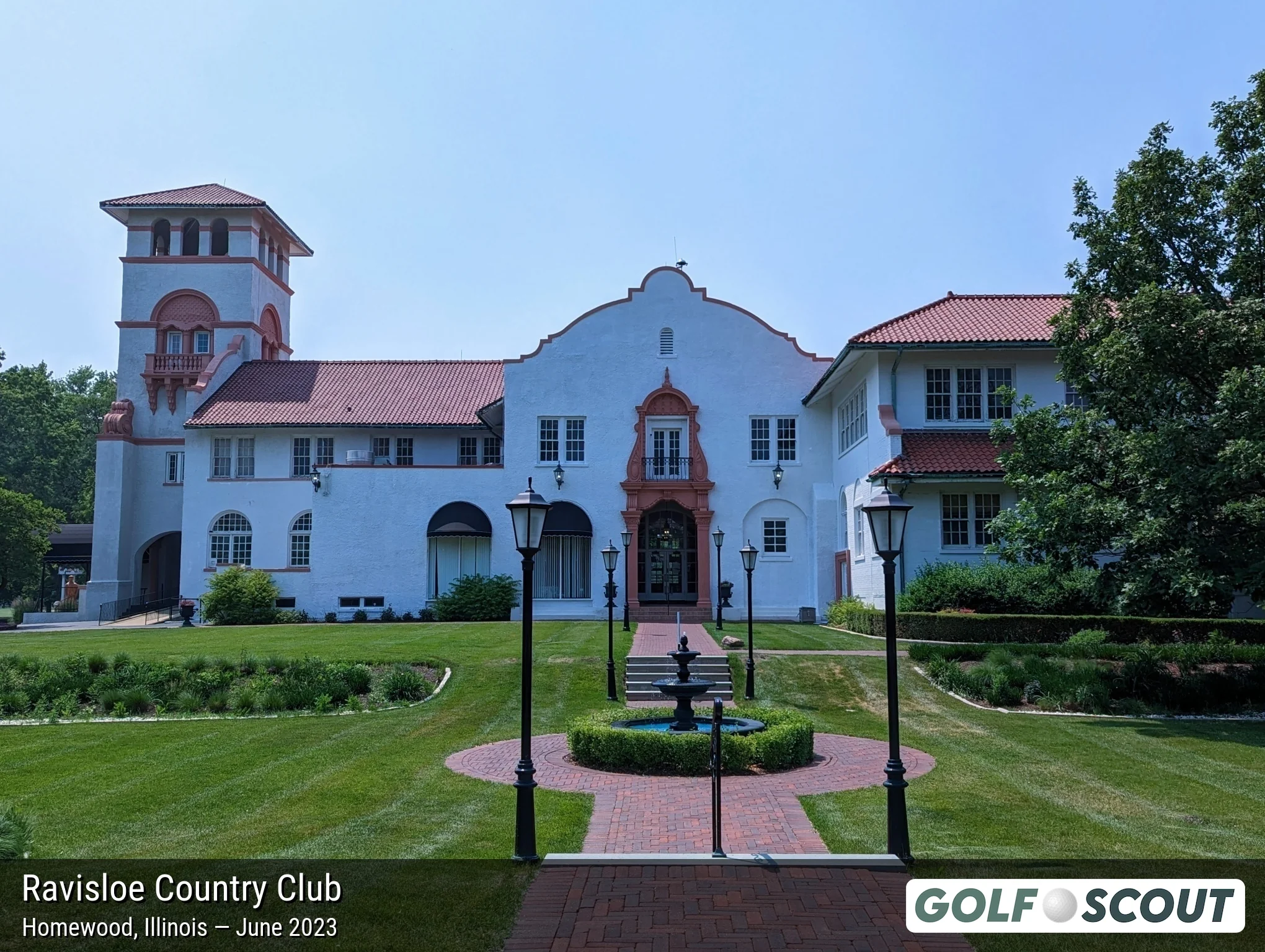
The beautiful grand Spanish Revival clubhouse with its 80-foot tower.
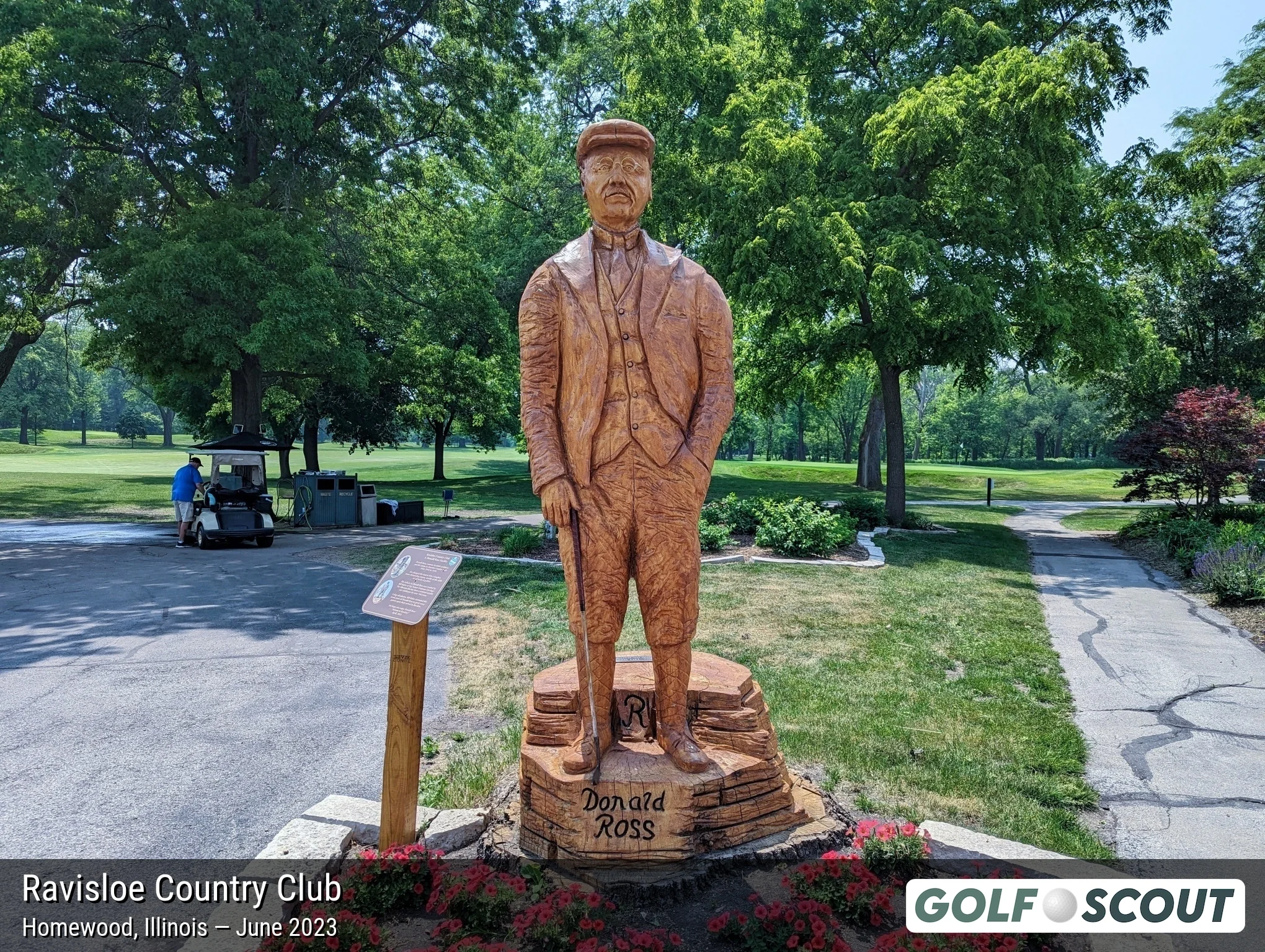
A statue of Donald Ross at Ravisloe.
When I called Ravisloe to ask about logistics, they told me to give them twenty or thirty minutes notice and someone would come pick me up from the Homewood train station. "Call when you're a few stops away" was the specific instruction. Absolutely tremendous on their part. A Donald Ross course, on the National Register of Historic Places, ninth on Golfweek's list of best public courses in Illinois, offering a complimentary pickup from the Metra station: that's not something you find every day. The course opened in 1901 as a private club and went public in 2009 after the recession forced a sale; Ross's renovations from 1916 to 1920 left the property with carefully placed bunkers, deceiving tee shot sightlines, and tricky greens that play harder than the 6,405 yards suggest.
Train Accessible
All six of these courses sit within three-quarters of a mile of a train station, walkable for most people with a bag and no bus connection required.
South Shore Golf Course (Chicago, IL)
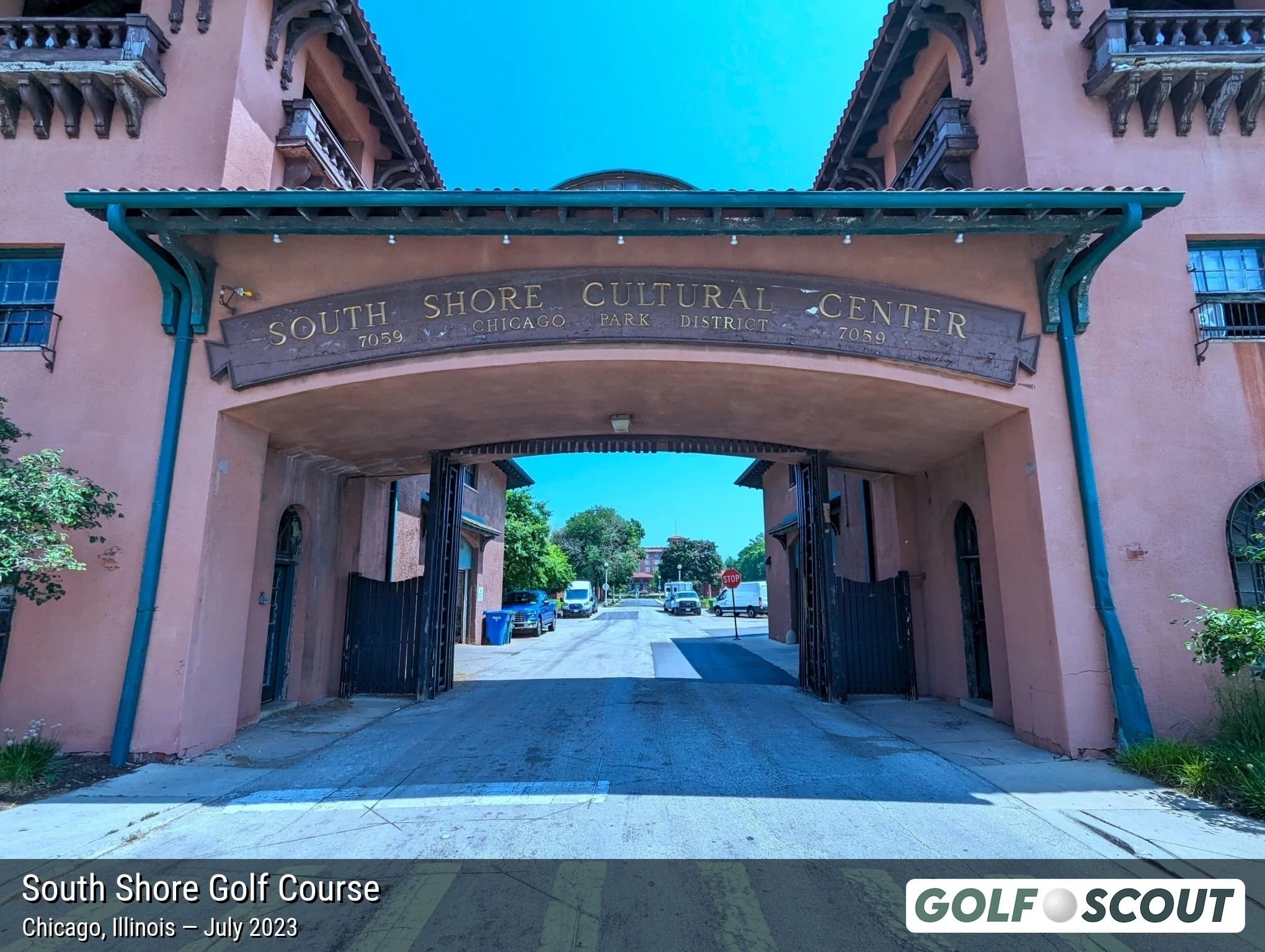
Entrance to the South Shore Cultural Center.
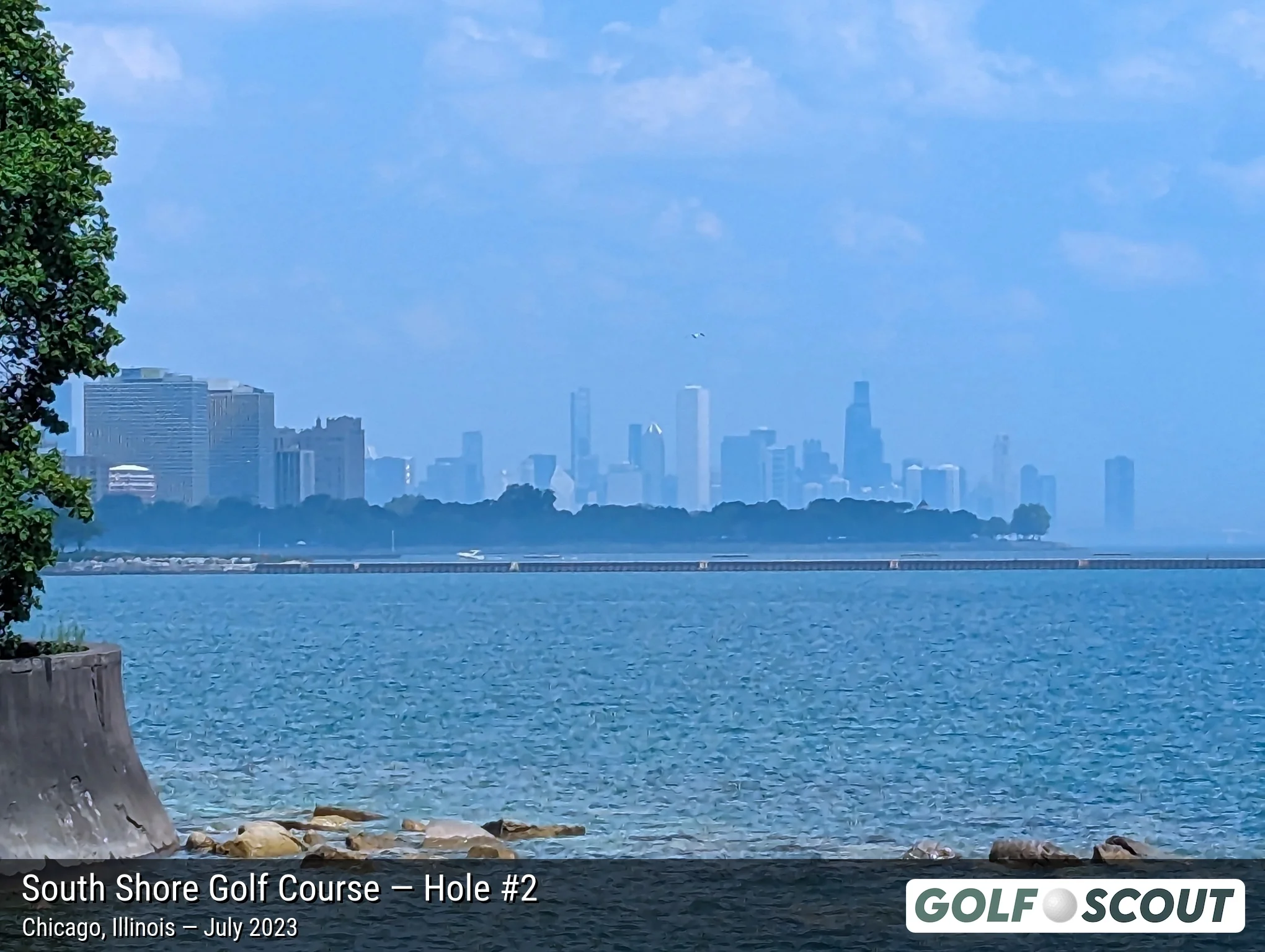
A view of the Chicago skyline from South Shore Golf Course.
South Shore Golf Course sits inside the South Shore Cultural Center, a building that served as the “Palace Hotel Ballroom” in The Blues Brothers and hosted Barack and Michelle Obama's wedding reception in 1992. Last time I played here, the group in front of me had two golf bags for four people, and I witnessed multiple swings and misses on the first tee. It's a Park District course, so these things happen. The nine-hole layout runs tight and tree-lined along South Lake Shore Drive, with Lake Michigan views on several holes you won't find at most city courses. Hole two is the standout: a slight dogleg left with the skyline framed across the water on a clear day. The pro shop is a walk-up window on the side of the cultural center building, easy to miss but worth finding.
Jackson Park Golf Course (Chicago, IL)
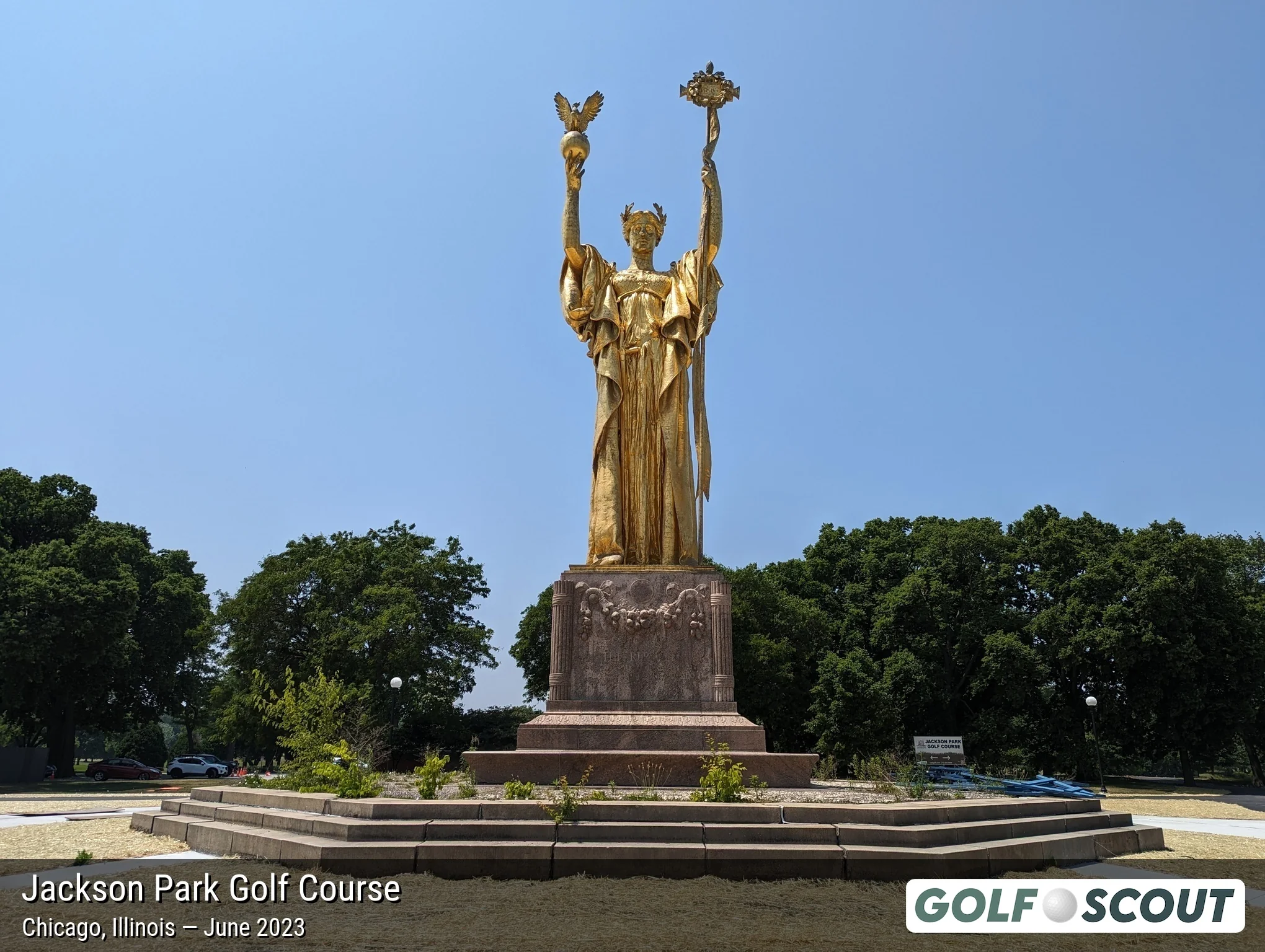
The first public golf course west of the Allegheny Mountains opened at Jackson Park on May 11, 1899, and the Chicago Tribune covered the first fifteen minutes of play in fine style: “Lost balls: 4. Sticks broken: 1 driver. Shins bruised: 5.” The 18-hole par-70 layout at 5,508 yards isn't the most demanding, but the fairways narrow on most of the 13 holes south of Marquette Drive and three holes play near the harbor. The clubhouse is named after Cecil A. Partee, who broke color barriers in Illinois politics and invested heavily in the course. The Red Line walk is flat and straightforward, and Metra Electric riders can also reach it, making Jackson Park one of the more transit-flexible options on this list.
Robert A. Black Golf Course (Chicago, IL)
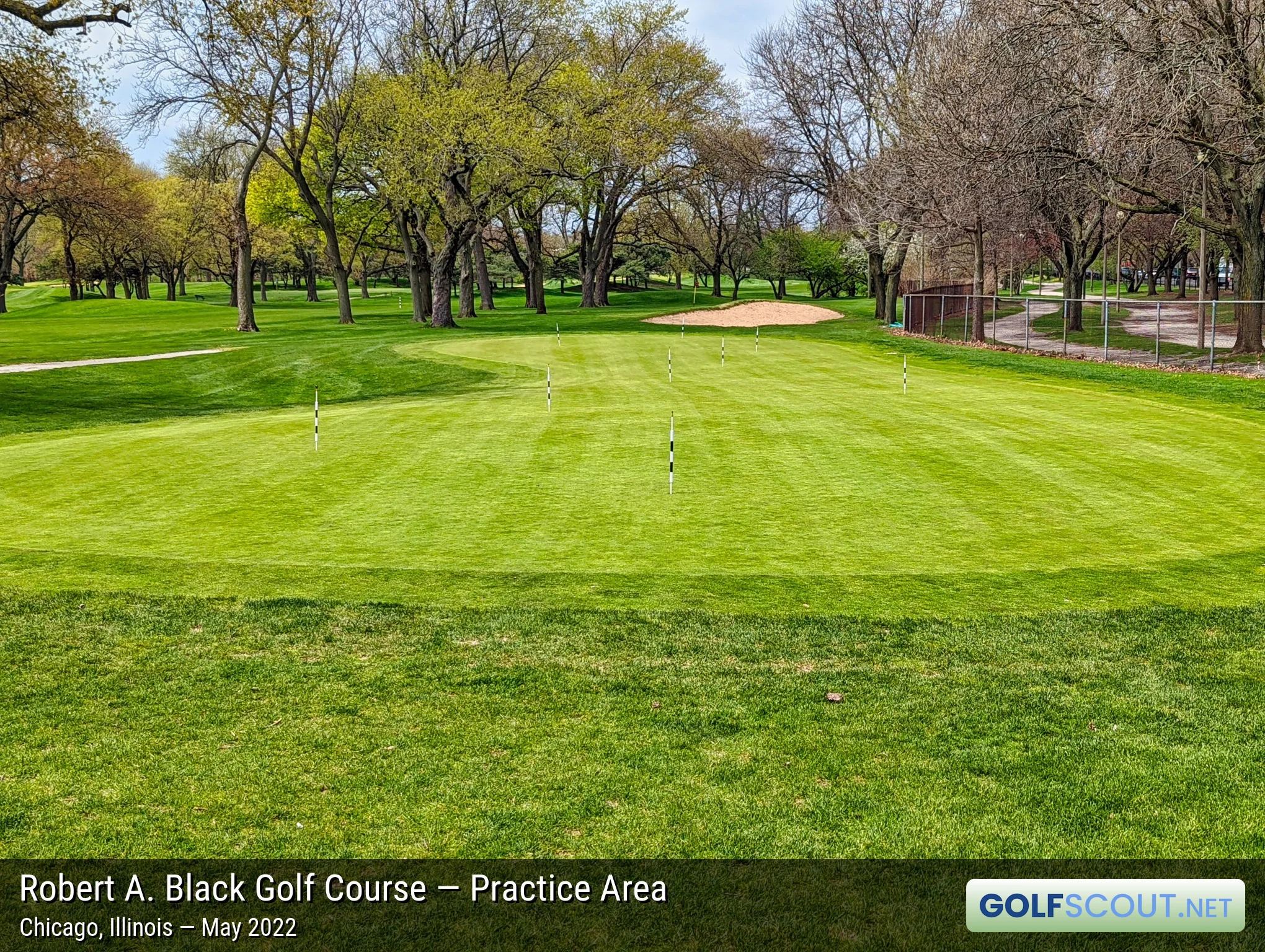
Originally the Edgewater Golf Club in 1910, this land faced a proposed shopping center development in the 1960s before community opposition led to a record $8 million state purchase in 1970. The nine-hole course that opened in 1980 was designed by Ken Killian and Dick Nugent, who called it “trapped as well as any course around.” Tight, tree-lined, and very walkable, with no water hazards and a par of 33 over 2,361 yards. At $28 on a Saturday it's one of the better value rounds on this list, and the Metra UP-N connection at Rogers Park is a less-obvious transit option that puts you a half mile from the entrance.
Billy Caldwell Golf Course (Chicago, IL)
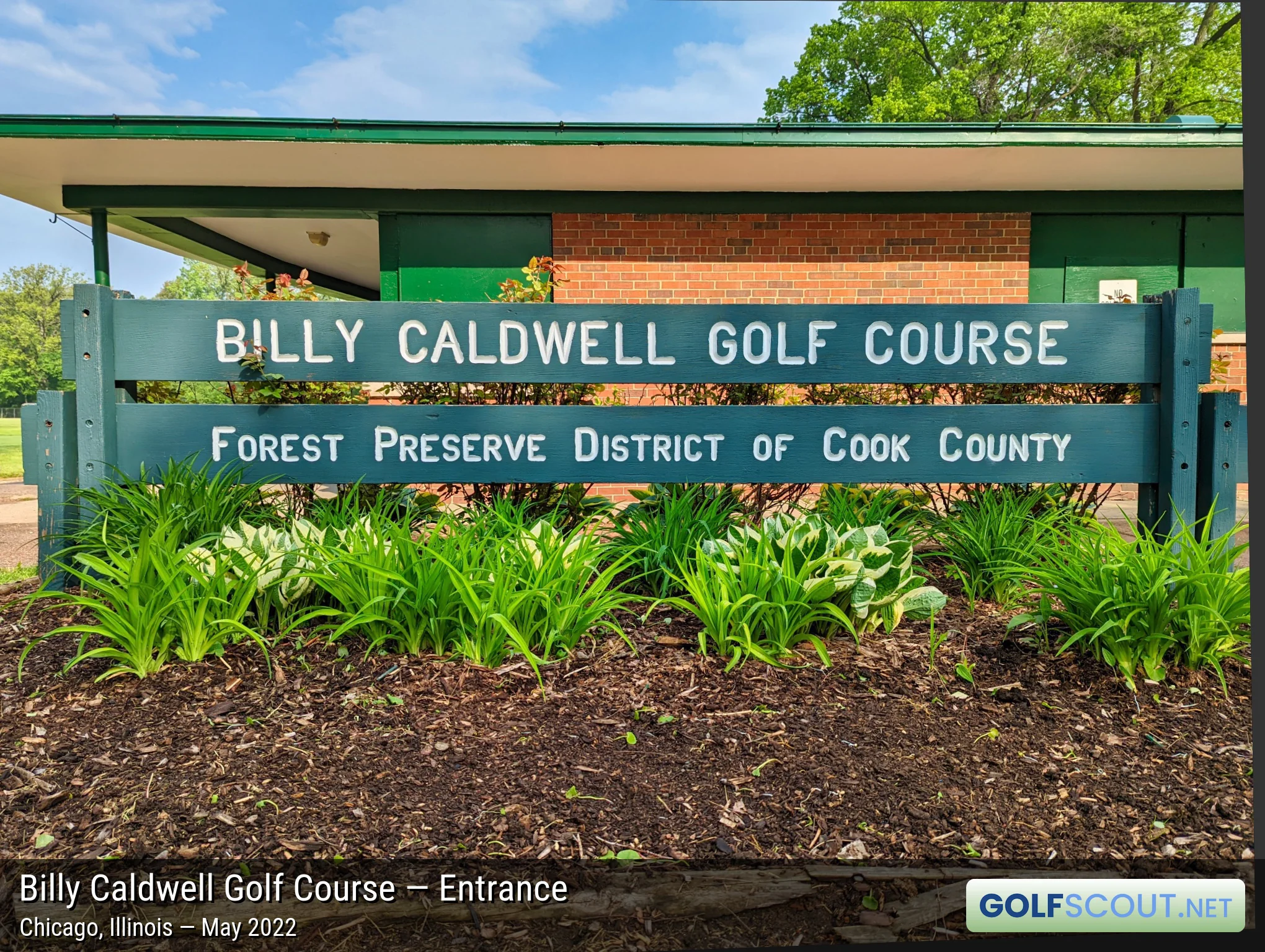
Entrance to Billy Caldwell GC.
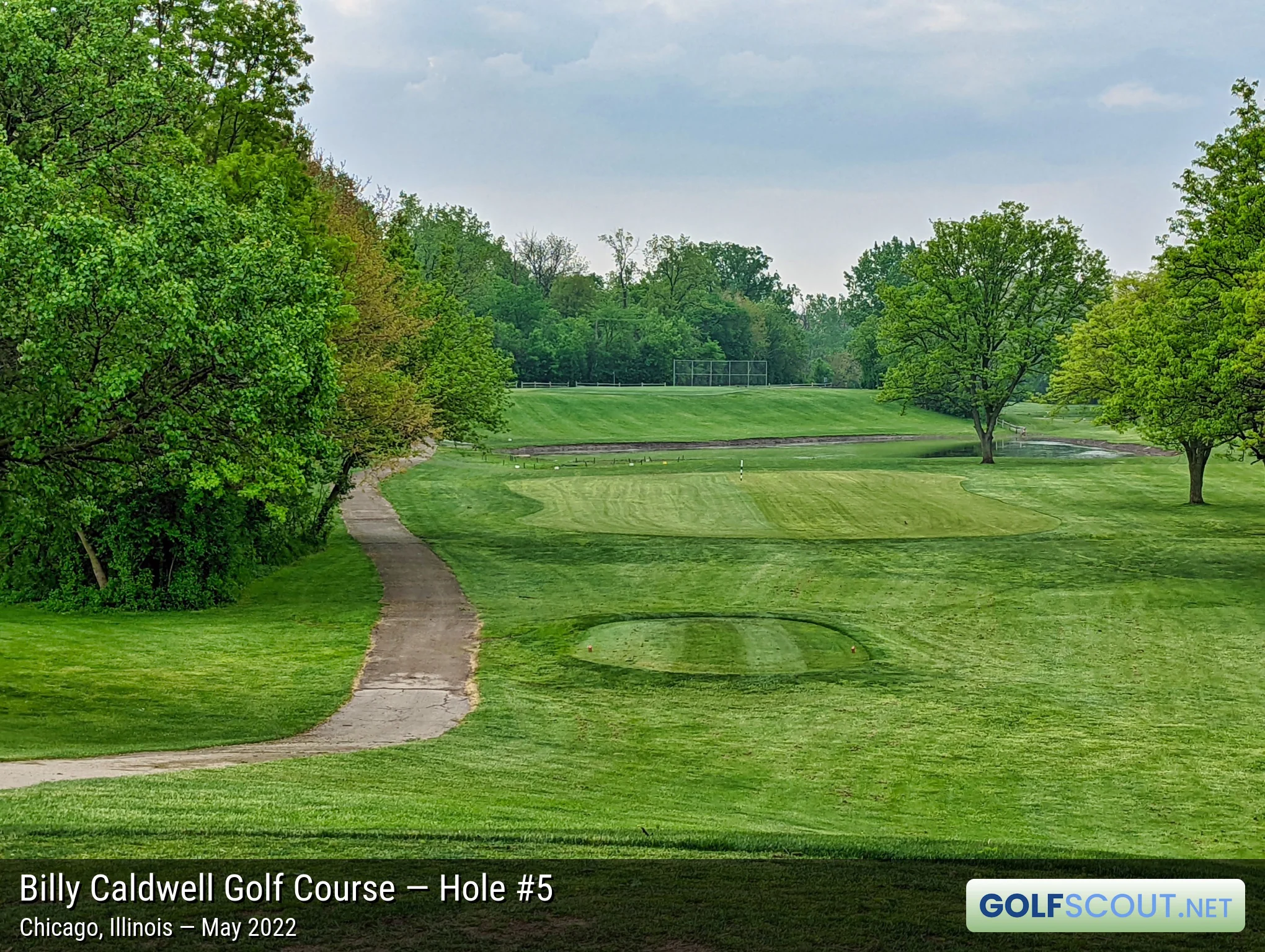
A view of the 5th hole from the tee box.
Billy Caldwell is an unpretentious Forest Preserve course on the northwest, suburban-feeling side of Chicago. The nine-hole layout dates to 1925 and has the unhurried atmosphere of a neighborhood track, the kind of place you stop by after work or before the day gets moving. Narrow fairways and bordering trees do the defending here, with some real elevation on holes 5, 6, and 7; after heavy rain those same holes have been known to flood, sometimes resulting in a reduced-rate round. The Edgebrook Metra station also serves Edgebrook GC just down the road, making this the only stop on the list that puts two courses within striking distance of a single train.
Edgebrook Golf Course (Chicago, IL)
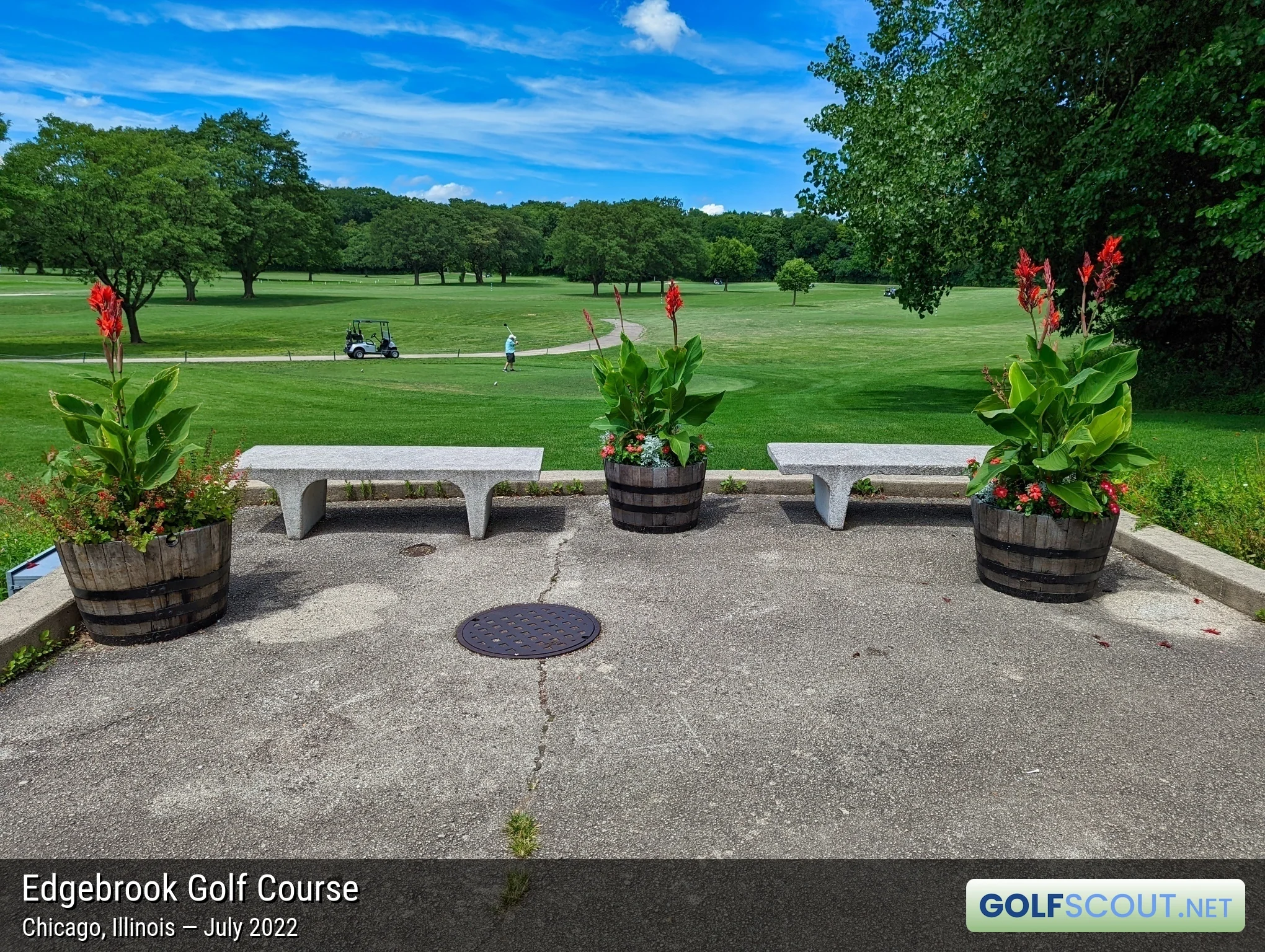
View of the golf course at Edgebrook.
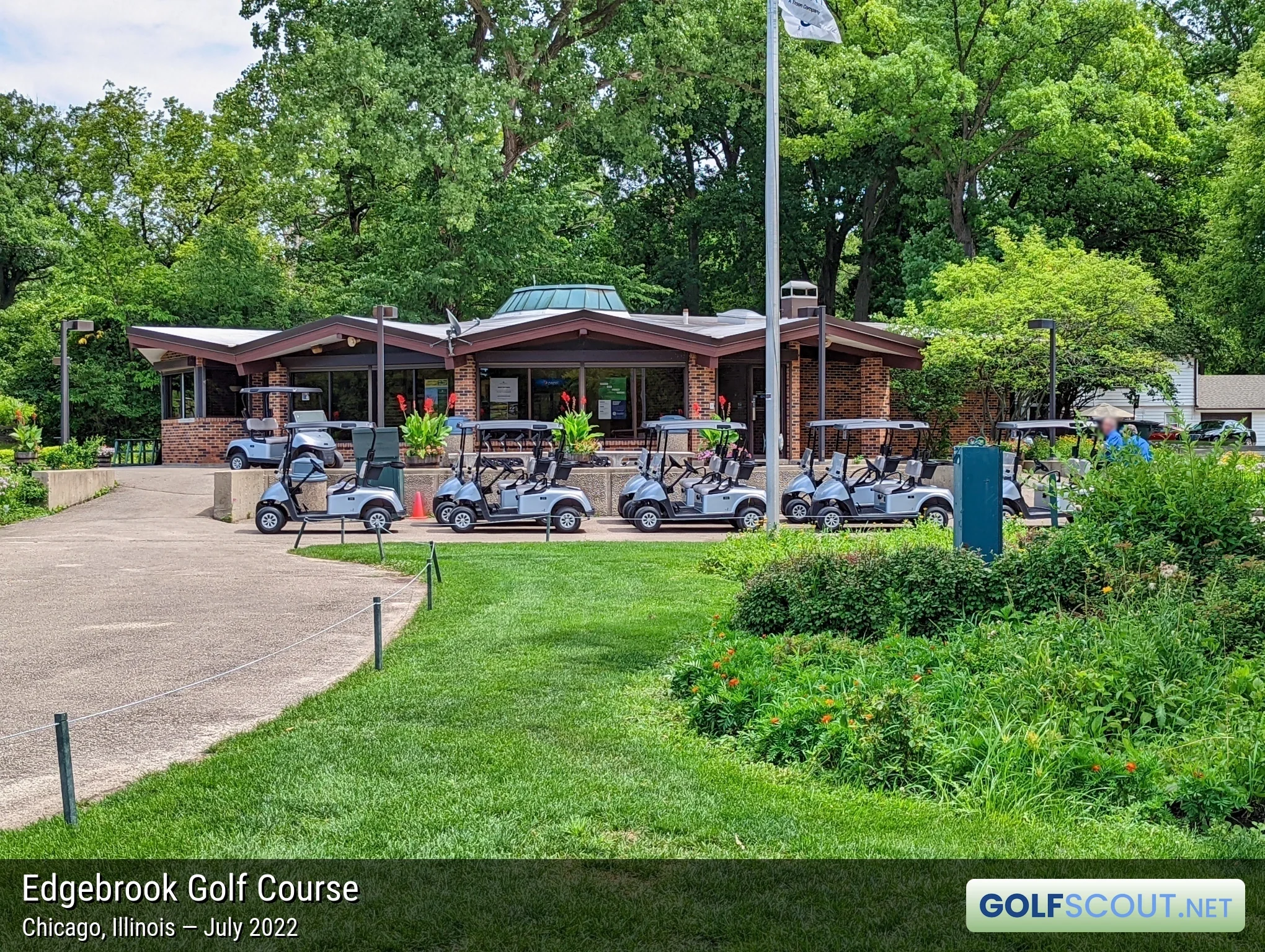
The Edgebrook clubhouse, similar in style to other Forest Preserve courses.
Edgebrook has been running since 1910 and under Forest Preserve ownership since 1919, making it one of the older public layouts in the city. At par 66 and 4,567 yards it's short, but rolling wooded terrain and more elevation change than many Chicago-area courses make it slightly more interesting than the scorecard suggests. A blind uphill tee shot on the par-3 fifth and elevated tee boxes on 10 and 16 add some unexpected drama. One heads-up: the Mathew Bieszczat Volunteer Resource Center next to the parking lot looks like the clubhouse; it isn't. Follow the walking path from the lot. This place shares the Edgebrook Metra station with Billy Caldwell, making this a two-for-one stop if you're ever feeling ambitious.
Sydney Marovitz Golf Course (Chicago, IL)
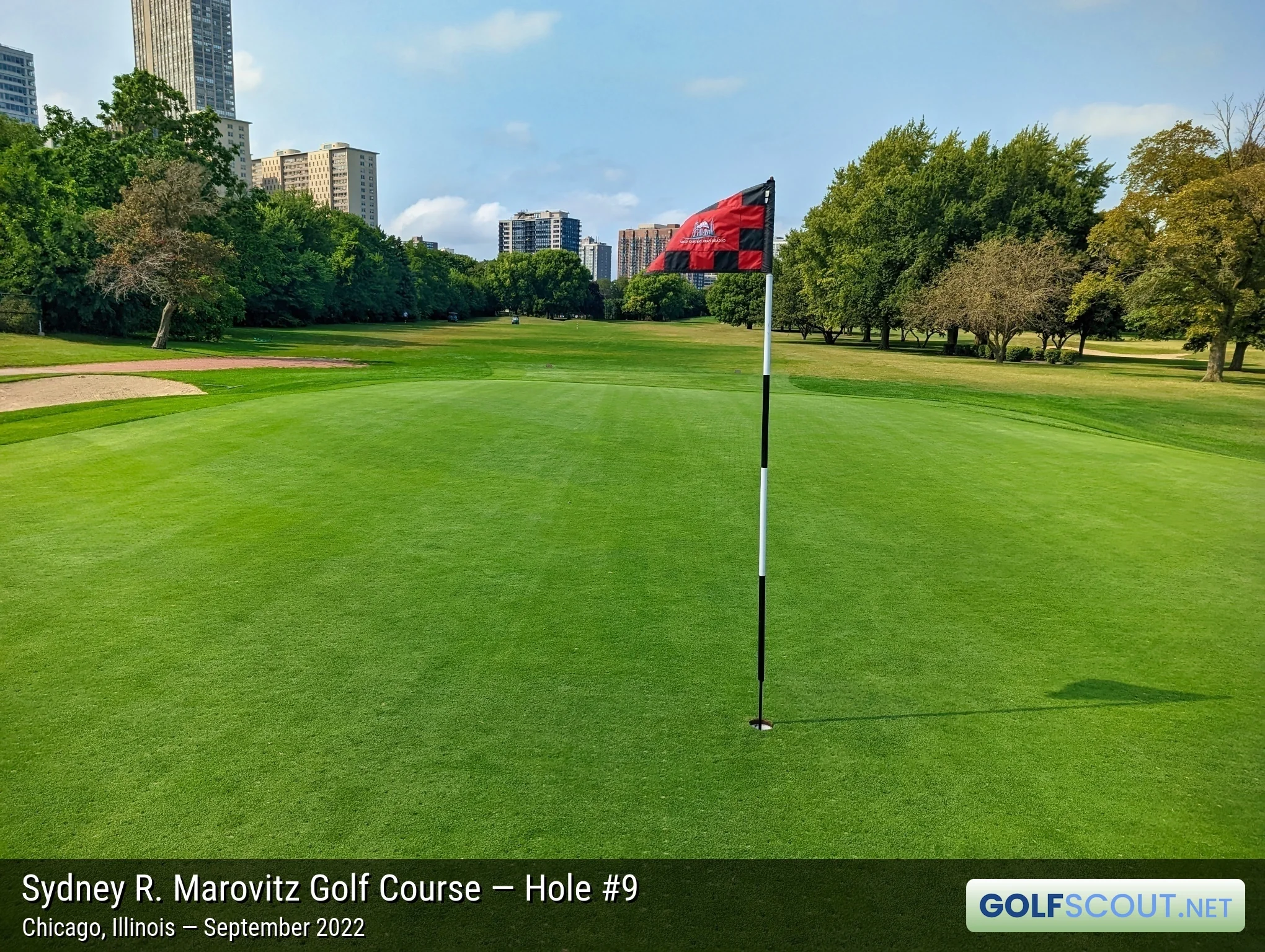
The 9th green at Sydney Marovitz.
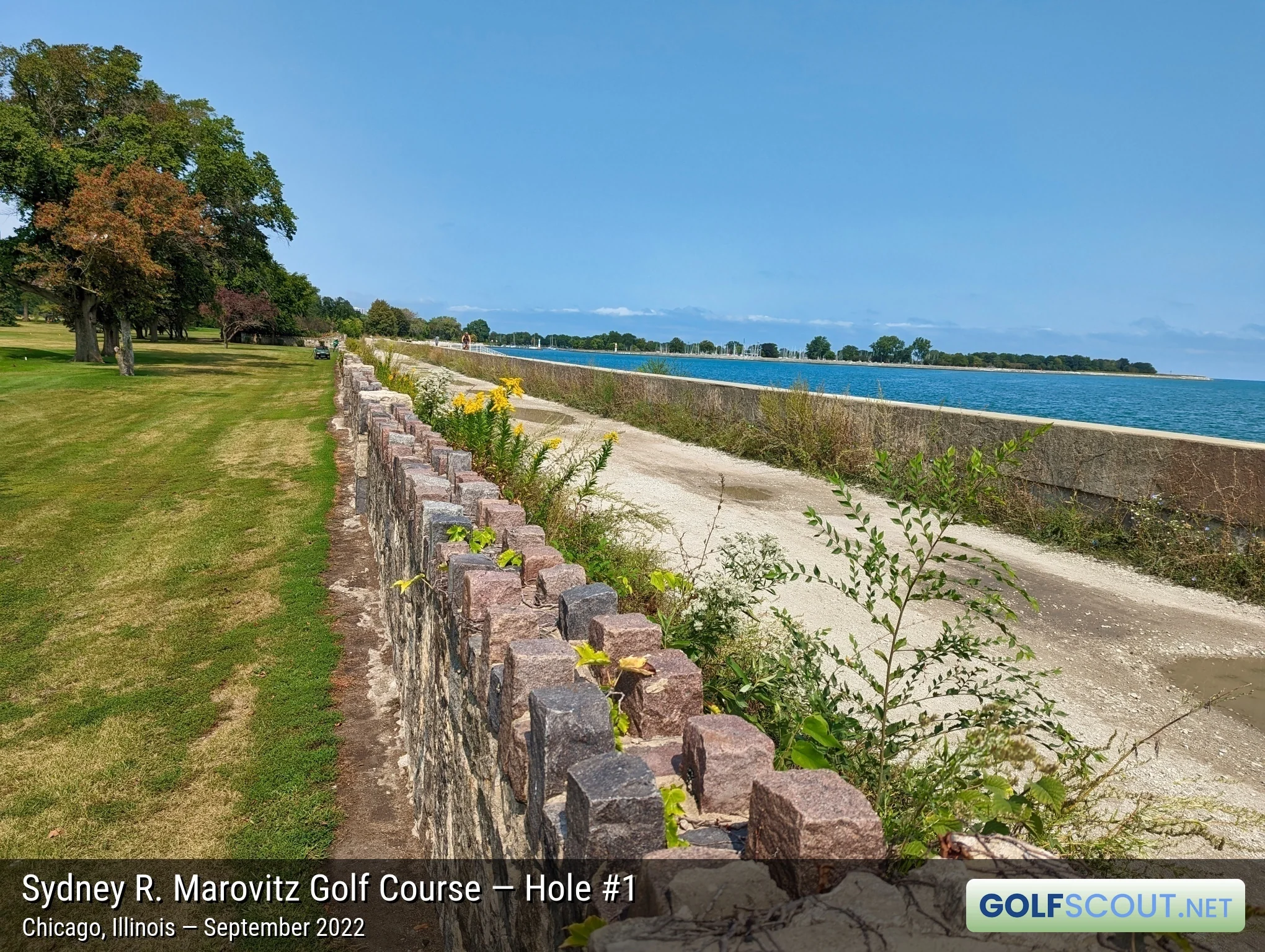
A view of the lake from the course.
The most popular nine holes in the city opened June 15, 1932, built on 71 acres literally reclaimed from Lake Michigan, with the original green fee set at 25 cents. It was called Waveland Golf Course until a controversial 1991 renaming that the Tribune noted was met with more resistance than if the Park District “could have filled the bunkers with toxic sludge.” Lake Michigan looms along the right side of the par-5 fifth, the par-3 sixth plays almost entirely over water, and too far right on seven or eight puts a ball in traffic on Lake Shore Drive. The Red Line walk from Addison will take you through a tunnel, tennis courts, and ball fields. Go early or go late on weekends to avoid long waits, though a recent round of mine here came in at a very reasonable 2 hours and 15 minutes.
Bus Accessible
No train station within reasonable walking distance, but CTA bus routes bring you to within a quarter to half mile of each of these four courses.
Joe Louis “The Champ” Golf Course (Riverdale, IL)
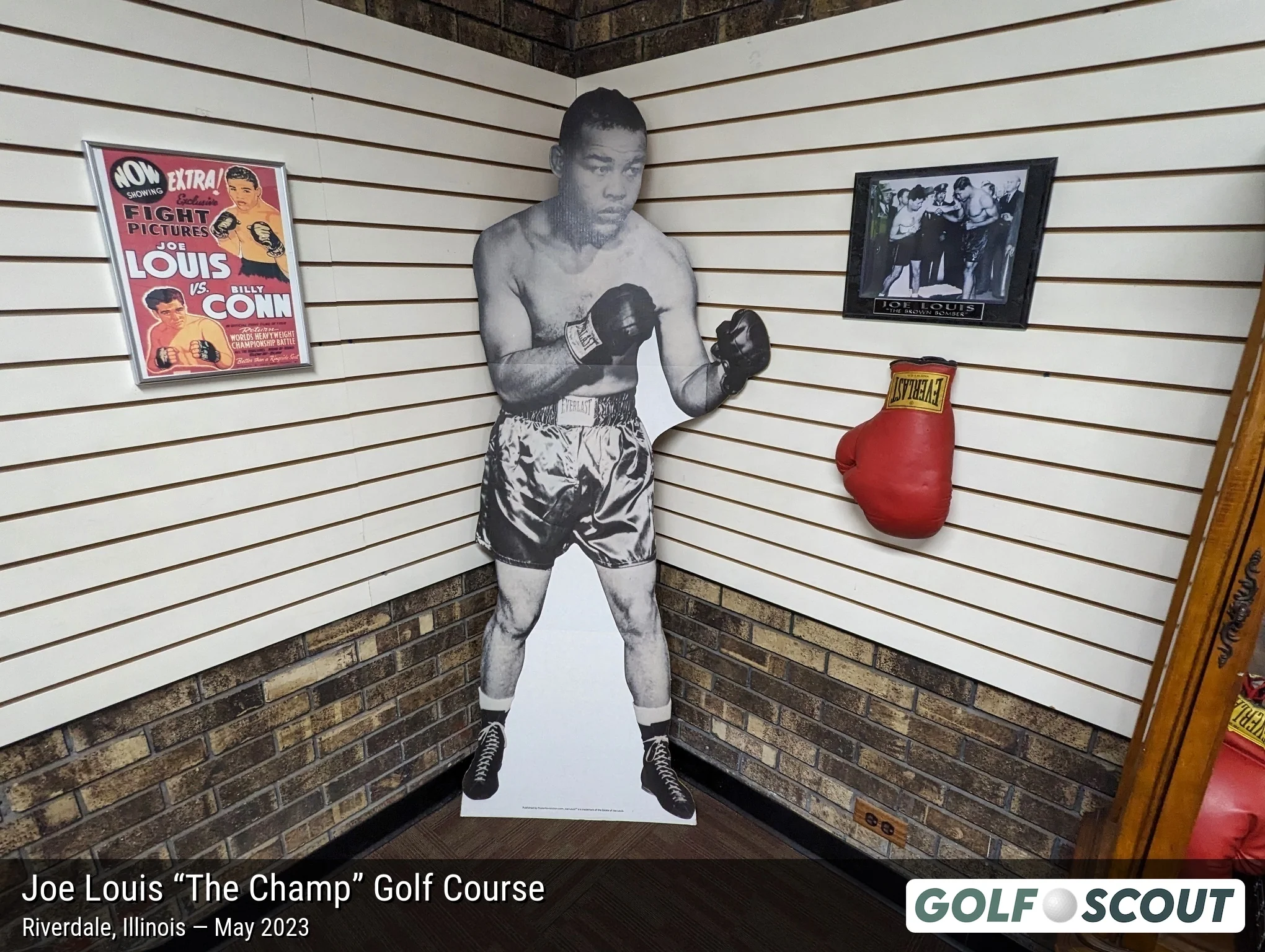
Before it was Joe Louis “The Champ” Golf Course, this was Pipe O' Peace, a Forest Preserve layout that opened in 1928. Louis played here regularly alongside Charlie Sifford, Lee Elder, and Cliff Brown, Black golfers barred from most private clubs at a time when the PGA had a whites-only playing policy. According to Sports Illustrated, high-stakes games in the 1960s had caddies holding as much as $5,000 in each pocket. Louis broke the PGA's color barrier in 1952 by playing the San Diego Open as an exempt amateur; the policy wasn't formally changed until 1961. The course was rededicated in his name in 1989, and the clubhouse walls still carry his photos, boxing gloves, and trophies. At 6,742 yards with a 603-yard par-5, it's the longest accessible course on this list and worth the trip for the history alone.
Marquette Park Golf Course (Chicago, IL)
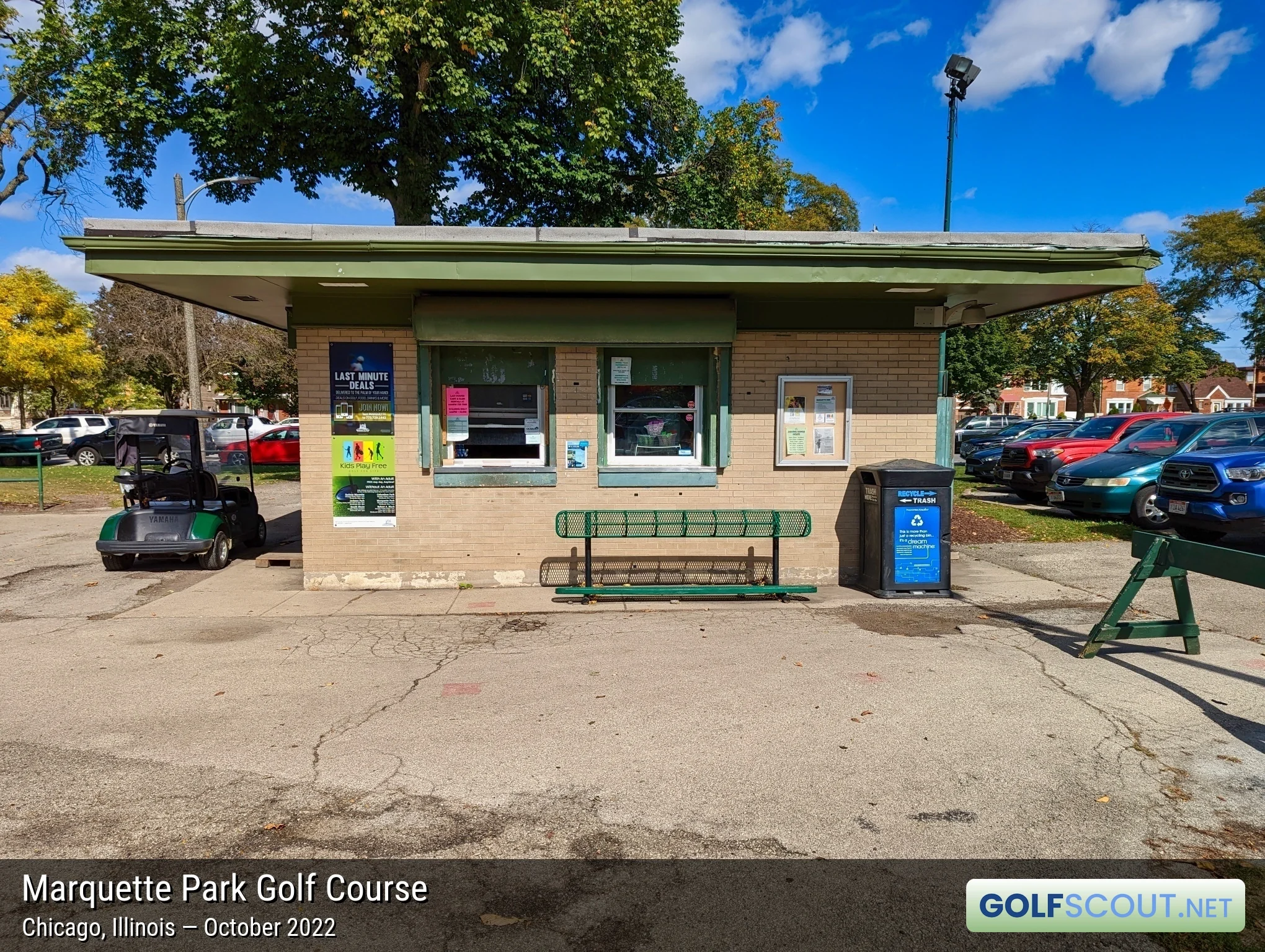
The June 5, 1913 Chicago Inter Ocean ran this item: “Marquette Park Links Open. Nine-hole course finished after a year of construction. It is thought that the opening of the new course will do away with the congestion at Jackson Park.” Over 110 years later, the course is still operating on largely the same footprint. The layout meanders around the park and Marquette Lagoon, which will happily claim your golf balls if you miss left, and at $22 it's among the lowest green fees in the Park District system. No formal pro shop, just a walk-up window, with a practice area and driving range a five-minute walk east on Kedzie. The MLK Living Memorial directly across the street commemorates Dr. King's march near this park in August 1966.
Columbus Park Golf Course (Chicago, IL)
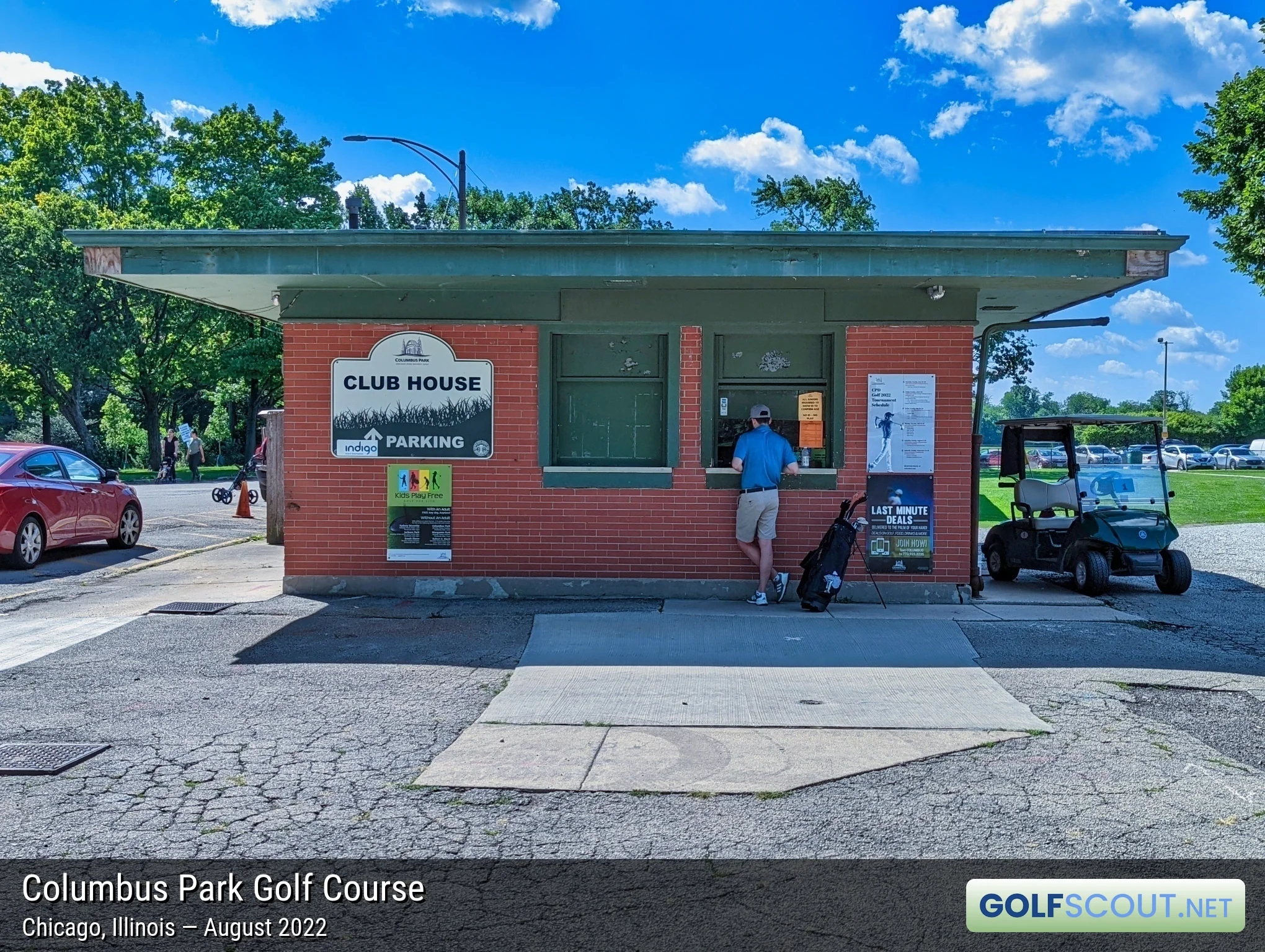
Columbus Park sits on the western edge of the city right on the Oak Park border. The surrounding park is worth the trip on its own: the historic Columbus Park Refectory sits adjacent to the course, and a garden area across the street has a lagoon and waterfalls worth walking through after the round. Wide open fairways and barely any trees make it a forgiving place for beginners to learn the game (save for the large bunkers near every green). Conditions vary, but the greens tend to be the best-maintained element on the property. Bus is the practical connection; the Green Line's Central stop is over a mile away.
Indian Boundary Golf Course (Chicago, IL)
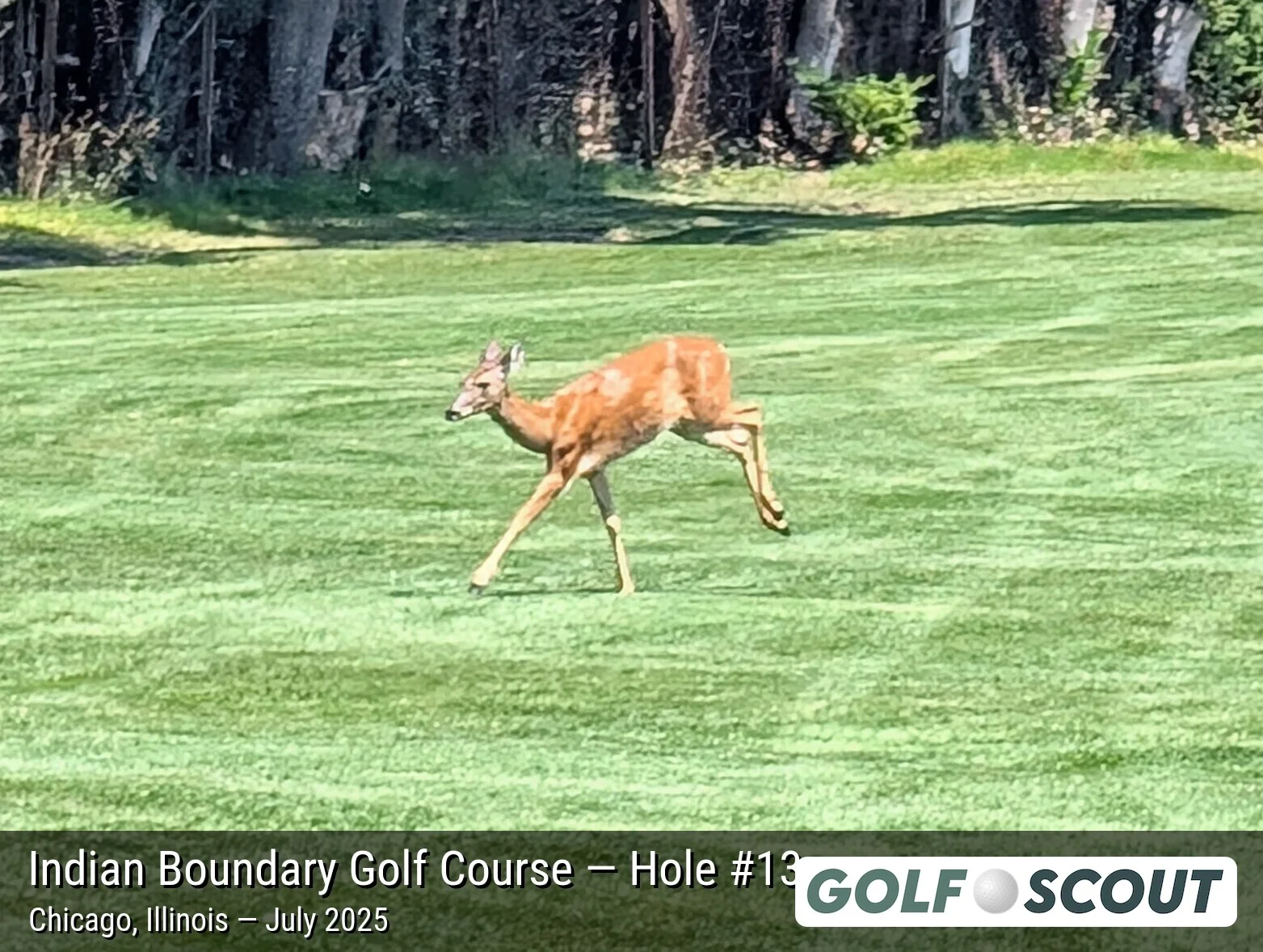
Indian Boundary has been part of the Forest Preserve system since 1932, reportedly built for $50,000. The layout is straight and uncomplicated, with flat greens and two ponds positioned just thoughtfully enough to demand some decisions. Deer appear on the property with remarkable consistency, as you can see from my photo above. The bus connection lands you about a half mile from the entrance, the longer end of this category, so plan accordingly.
Take a Rideshare
Harborside International Golf Center (Chicago, IL)
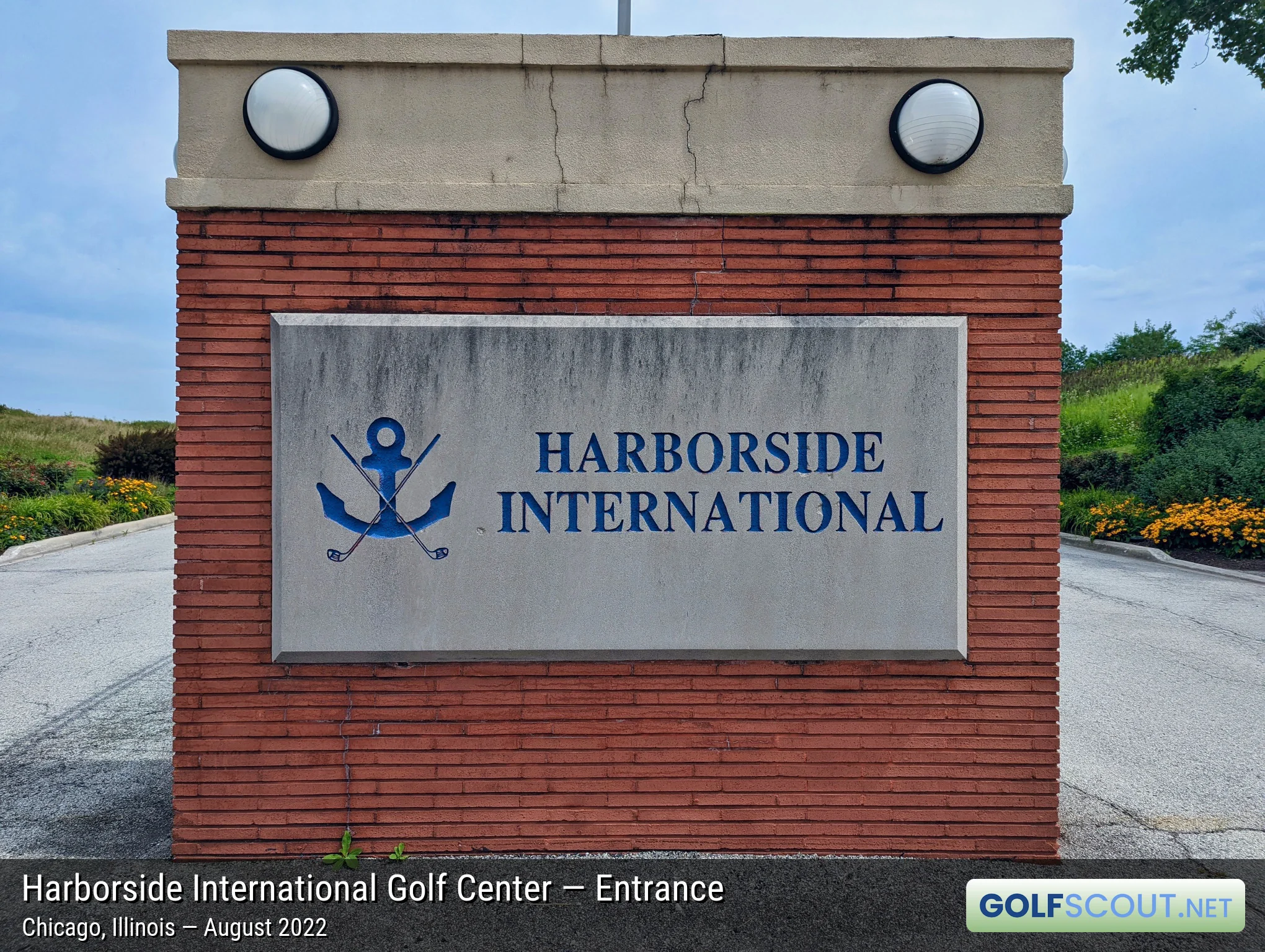
The entrance to Harborside.
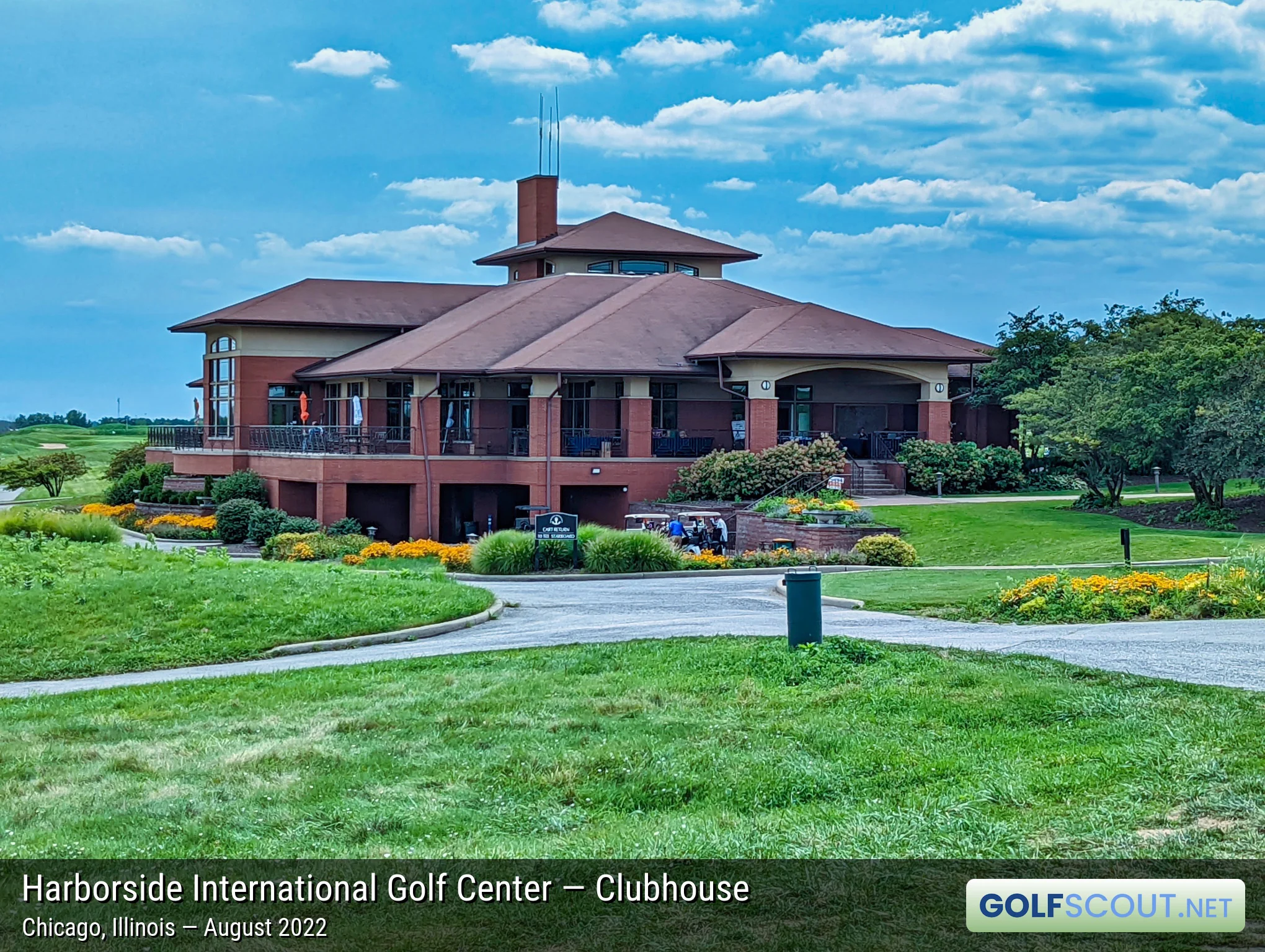
Harborside's large and stately clubhouse.
Harborside has the two nicest courses in the city and it would be a disservice to leave it off this list, even with a difficult transit situation. Port and Starboard courses are links-style layouts built on 428 acres of former landfill, with wide fairways twisting through elevated fescue mounds, punishing bunkers, and almost constant wind that makes every club selection feel like a small wager. The Port course plays 7,123 yards from the tips with a rating of 74.6 and a slope of 137; the Frank Lloyd Wright-inspired clubhouse and 57-acre practice facility are among the best in Chicagoland. The nearest bus stop involves a long walk through a stretch most golfers won't love with a bag on their back. Take the rideshare for the last mile and don't fight it. The courses are worth it.